Develop/DevOps

규모 확장 시스템 설계 기본 | Fundamentals of Designing Systems for Scale

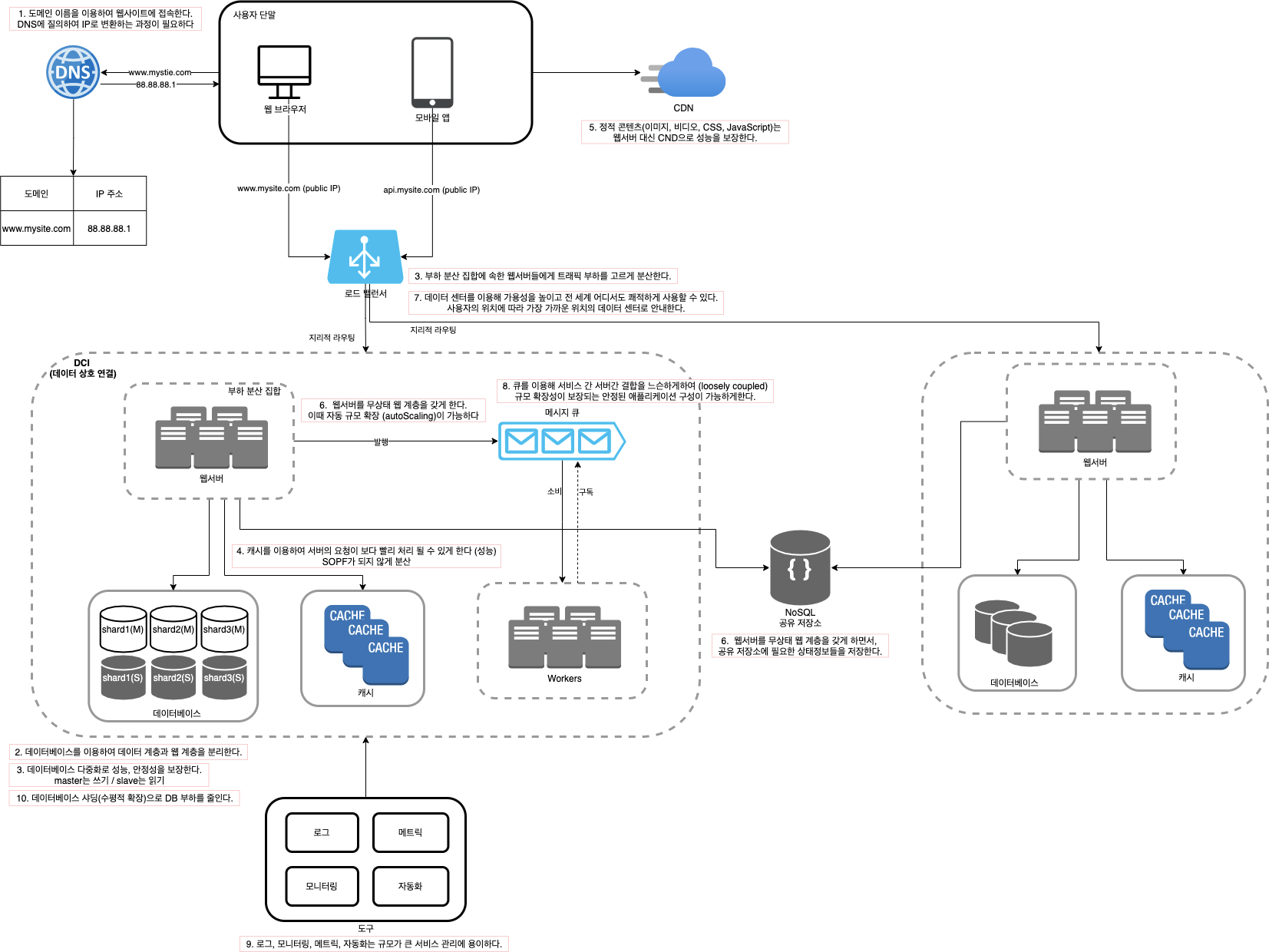
1. 단일 서버 DNS : 도메인 이름을 이용해 웹사이트에 접속한다. DNS에 질의하여 IP로 변환하는 과정이 필요하다. http 요청을 보내고 클라이언트는 응답을 받는다2. 데이터베이스 데이터베이스 : 웹/모바일 트래픽 처리 서버 (웹 계층)와 데이터베이스 서버 (데이터 계층) 분리를 시도한다.3. 로드밸런서 로드밸런서 : 부하 분산 집합에 속한 웹서버들에게 트래픽 부하를 고르게 분산한다 데이터베이스 : 다중화로 성능과 안정성을 보장한다 (master는 쓰기, slave는 읽기)4. 캐시 캐시 : 캐시를 이용해 서버의 요청이 보다 빨리 처리될 수 있게 한다. SOPF가 되지 않게 분산한다5. 콘텐츠 전송 네트워크 (CDN) CND : 정적 콘텐츠(이미지, 비디오, CSS, ..

규모 확장 시스템 설계 기본 | Fundamentals of Designing Systems for Scale

728x90

1. 단일 서버 
   DNS : 도메인 이름을 이용해 웹사이트에 접속한다. DNS에 질의하여 IP로 변환하는 과정이 필요하다. 
   http 요청을 보내고 클라이언트는 응답을 받는다

2. 데이터베이스
   데이터베이스 : 웹/모바일 트래픽 처리 서버 (웹 계층)와 데이터베이스 서버 (데이터 계층) 분리를 시도한다.

3. 로드밸런서
   로드밸런서 : 부하 분산 집합에 속한 웹서버들에게 트래픽 부하를 고르게 분산한다
   데이터베이스 : 다중화로 성능과 안정성을 보장한다 (master는 쓰기, slave는 읽기)

4. 캐시
   캐시 : 캐시를 이용해 서버의 요청이 보다 빨리 처리될 수 있게 한다. SOPF가 되지 않게 분산한다

5. 콘텐츠 전송 네트워크 (CDN)
   CND : 정적 콘텐츠(이미지, 비디오, CSS, JavaScript)는 웹 서버대신 CDN으로 성능을 보장한다

6. 무상태(stateless) 웹 계층
   웹서버 : 무상태 웹 계층을 갖게 함으로써 자동 규모 확장(autoScaling)이 가능하다
   공유 저장소 : 웹서버를 무상태 웹 계층으로 전환하면서, 필요한 상태정보들은 공유 저장소에 저장한다.

7. 데이터 센터
   로드밸런서 : 데이터 센터를 이용해 가용성을 높이고, 전 세계 어디서도 쾌적하게 사용이 가능하다. 지리적 라우팅을 이용하여 사용자의 위치에 따라 가장 가까운 위치의 데이터 센터로 안내한다.

8. 메시지 큐
   메시지 큐 : 서버간 결합을 느슨하게 하여 (loosely coupled) 규모 확장성이 보장되는 안정된 애플리케이션 구성이 가능하게 한다.
   
9. 로그, 메트릭 그리고 자동화
   도구 : 로그, 모니터링, 메트링, 자동화는 규모가 큰 서비스 관리에 용이하다

10. 데이터베이스의 규모 확장
    데이터베이스 : 샤딩으로(수평적 확장 = 서버증설) DB부하를 줄인다.

관련 책 : 가상 면접 사례로 배우는 대규모 시스템 설계 기초


1. Single Server 
   DNS : You access a website using a domain name. A process of querying DNS to resolve it into an IP address is needed. 
   You send an HTTP request and the client receives a response.

2. Database
   Database : We separate the server that handles web/mobile traffic (web tier) from the database server (data tier).

3. Load Balancer
   Load Balancer : Evenly distributes traffic load across web servers in the load-balanced set.
   Database : Replication ensures performance and reliability (master handles writes, slave handles reads).

4. Cache
   Cache : Uses cache so that server requests can be processed faster. Distribute caches to avoid becoming a SPOF.

5. Content Delivery Network (CDN)
   CDN : Static content (images, videos, CSS, JavaScript) is served through a CDN instead of web servers to ensure performance.

6. Stateless Web Tier
   Web Server : By making the web tier stateless, auto-scaling becomes possible.
   Shared Storage : When converting web servers to a stateless web tier, the necessary state information is stored in shared storage.

7. Data Centers
   Load Balancer : Using data centers improves availability and enables a smooth experience from anywhere in the world. GeoDNS routing directs users to the nearest data center based on their location.

8. Message Queue
   Message Queue : By loosely coupling servers, it enables building stable applications with guaranteed scalability.
   
9. Logging, Metrics, and Automation
   Tools : Logging, monitoring, metrics, and automation make it easier to manage large-scale services.

10. Database Scaling
    Database : Sharding (horizontal scaling = adding more servers) reduces the database load.

Related Book: System Design Interview – An Insider's Guide


댓글

Comments