
2021년 회고 | 2021 Year in Review
우선 회고를 시작하기 전에, “올해도” 연말에 카톡 메시징 서버 문제 없었다!!! 올해는 내가 직접 연말 대응을 핸들링 하게 되었어서, 연말 기록까지 남기고 싶어서 회고를 뒤로 미루게 되었다.
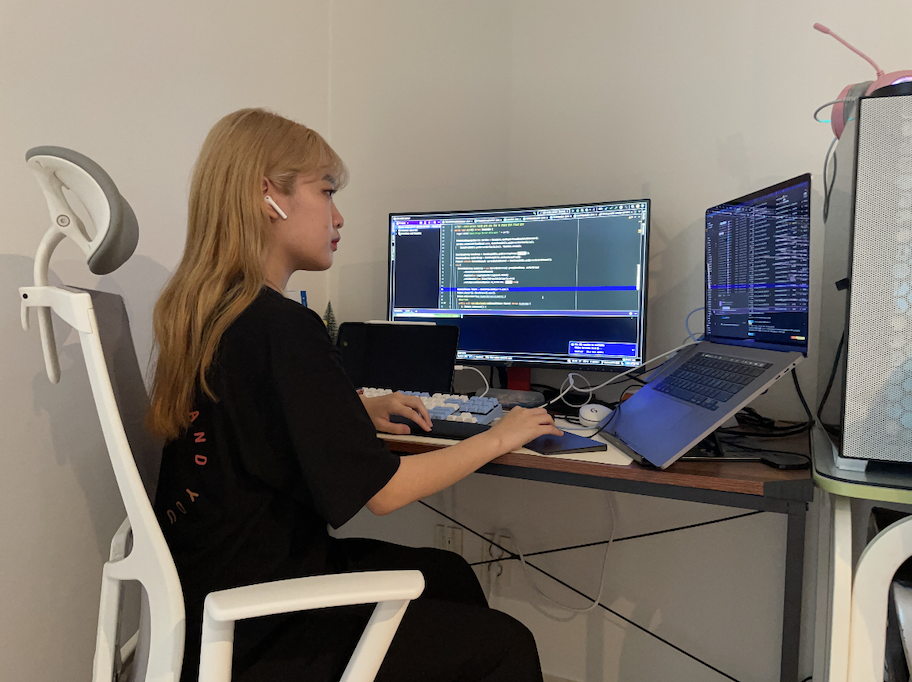
20년도 9월에 입사를 하고 12월부터 실질적인 실무 업무를 시작하게 되었는데 22년이된 지금!! 내가 3년차라니?!! 너무 놀랍다ㅋㅋㅋ 사실상 실무를 1년 1개월 정도 한 상태인데 3년차라니.. 다시 한번 놀랍다.
그래서 21년도는 나에게 입사 후 실무 개발자로써 적응을 하는 시기, 이제 개발을 직업으로 삼게 되면서 일과 일상의 밸런스를 위해 개발 외에 것들을 시도해보는 시기였다. 그렇다면 지금부터 회고를 시작해보자
이번 회고는 1년치 일기장쓴 기분이라 가독성이 없다.
1. 회사
1-1. 업무를 숙제처럼?
매일매일 업무일지를 쓰면서 회사 일을 하나씩 처리했는데, 확실히 상반기와 하반기를 비교하면 많이 달라진게 느껴진다.
상반기만해도 일반채팅 개발버전 배포하는 것만해도 엄청 놀라워하고 가슴떨려하고 그랬는데, 하반기에 와서는 그 일반채팅을 리얼 버전으로 서버를 증설해서 배포하기도하고, 서버 배포 설정을 수정하려고 ansible을 이래저래 고치기도하고 결국 마지막엔 연말대응까지 이것이 짬이 차는 과정인가..?😳

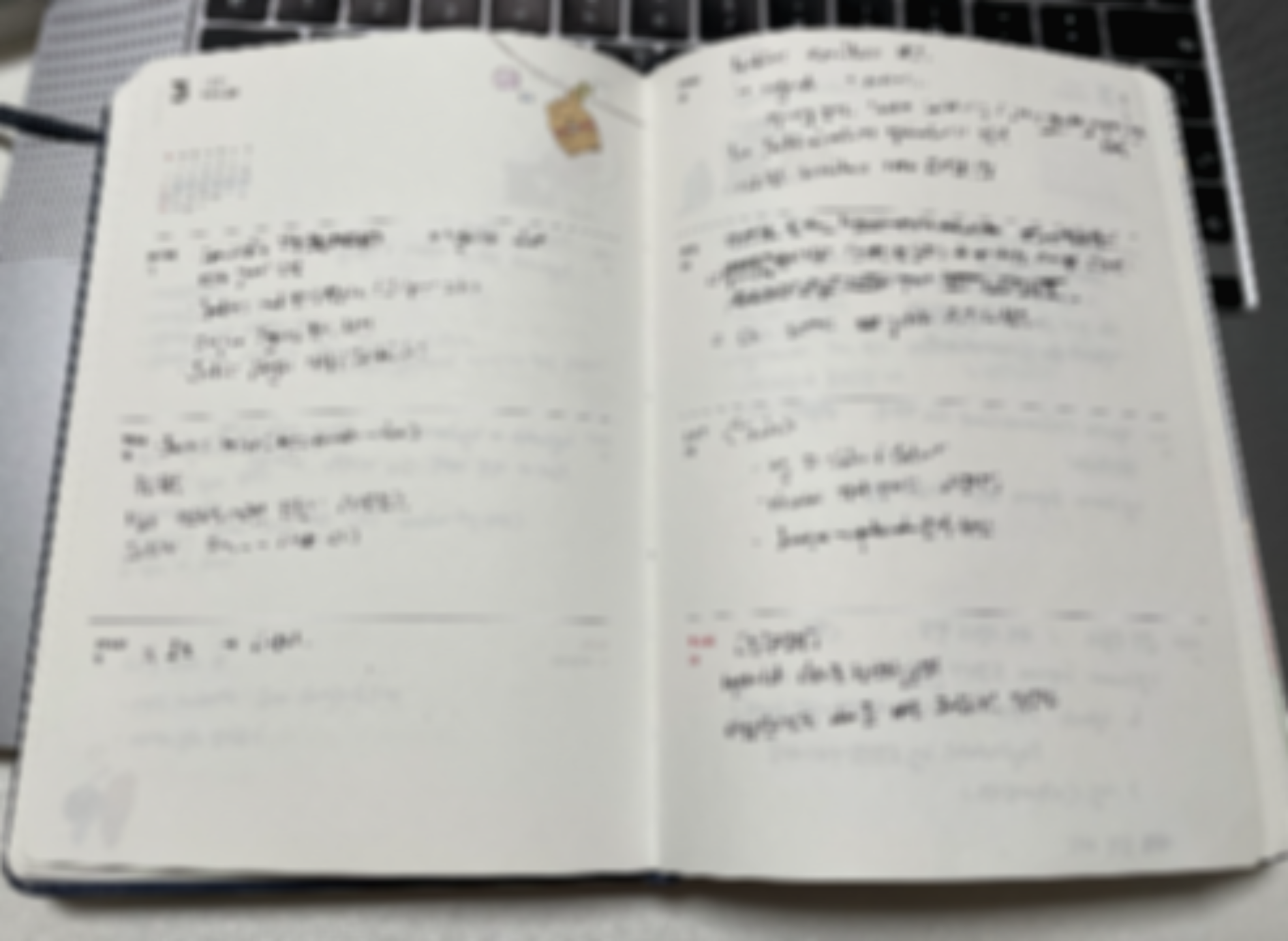
확실히 상반기 후반기 사이 내가 업무를 하는 모습에서 차이는 있었던 것같다. 상반기만해도 내가 이런 커다란 과제를 해도 될까? 잘 모르는데 메시징 일을 받아도 될까? 망설이면서 시니어분들이 지정해주시는 일만 했었다면, 하반기에는 상반기에 비해서 내가 먼저 일을 찾아서 했었던 것 같다. 파트에서 묵혀둔 이슈를 몇개 가져가기도하고, 클라이언트분과 친해지면서 적극적으로 커뮤니케이션하면서 메시징 로직 가이드를 드리기도하고, 코드에서 고치고 싶은 사항이 있다고 하면 먼저 이슈를 따서 진행하기도하고 그랬었다. 상반기 초에 파트 시니어 분께 “쟈미는 일을 숙제하듯이 해” 라는 말을 들었었는데, 이 말이 변하게 된 계기였던 것 같다. 처음 이 말을 들었을 때는 아무 생각없이 음 나는 숙제 항상 잘했고 퀄리티 높게 해왔었으니까. 되게 정성적으로 한다는 뜻인가? 하고 생각했었는데, 이 말이 신경쓰여서 은님께 여쭤보니, 일을 좀더 능동적으로 해야한다는 말이라는 것을 알게되었기 때문이다.
1-2. 어떤 개발자가 좋은 개발자일까?
그래도 아직은 이슈를 자잘자잘하게 가져가는 느낌이긴 하다. 자진해서 c > java 포팅작업을 주도하겠다 라는 시니어 개발자 분이 있었는데, 이분처럼 나중에는 정말 큰 이슈도 내가 먼저 이슈업 하는 날이 오지 않을까?라는 생각이 들기도한다. 이런 걸 보면 확실히 메시징파트에는 참 배울 분들이 많다고 느낀다. 그런데 그때문에 입사 전과 후로 어떤 개발자가 되어야하나라는 생각에 변동을 겪고있다. 이전에는 당연히 자바, 스프링 좋아하니까 그걸 마구마구 파고 막 클린코드, DDD이런거 다 적용하는 개발자가 좋고, 당연히 실무에 들어가면 spring구조 다 까보고 그러고 있으면 좋은 개발자가 되지 않을까? 라고 생각하고 있었다, 그런데 입사 이후에는 어떻게 하면 좀 더 좋은 구조의 서버 구조를 가지고, 여러가지 컴포넌트를 올바르게 사용할 수 있는지도 매우 중요하구나를 깨닫고있다.
왜냐하면 아무래도 장애가 나거나, 새로운 컴포넌트에 대한 계획을 세울때는 코드를 어떤방식으로 짜고.. 보다는 어떻게 하면 좀더 성능을 높일 수 있고, 이런 엣지케이스에는 어떻게 대응할 것이고 등등의 실무적인 관점을 접했기 때문이 아닐까 싶다. 그래서 이전에는 redis를 사용한다하면, spring-data-redis를 사용할 때 어떤 메서드를 사용해야 좋은 코드 좋은 테스트 코드를 짤 수 있다! 이런거를 고려했다면, 지금 메시징 파트에 와서는 redis 자체에 대해서 고민을 해야한다는걸 깨달았다. redis가 가지는 자료구조, failover 정책, evction 정책, 백업 정책 등등 그 자체에 대해서 먼저 알고가는게 더 중요할 수 있다는 걸 경험적으로 습득하게 되었다. 그래서 그냥 어떤 언어를 잘하는 보다는 문제상황이 발생하면 잘 해결하는 개발자가 사실 일하기는 가장 좋은게 아닐까 하면서 생각이 변하는 중이다. 파트장님과도 여러번 고민을 공유했었는데, 다 다른길을 걷고있고 어떤 개발자가 좋다는 정답은 없다고 조언을 주셨었다.
1-3. 인턴멘토 / 공채 신입 코드리뷰어
그리고 하반기부터 내 아래로 인턴 / 신입분들이 들어왔다. 나는 내가 아직도 신입같은데.. 내가 인턴분의 멘토를 했었고, 공채 신입 분들의 코드리뷰를 담당하고 있다. 사실 처음에는 나보다 나이가 많으신 분들을 대상으로 괜찮으려나 걱정도 했었는데 괜찮았다.✌️ 어찌됐든 신입 과제가 내가 알고있는 선에서 나왔고 모르면 공부하면 되니까라고 생각했다.
나도 연차가 많이 높진 않지만 인턴 멘토를 하면서 회사가 어떤 사람을 신입개발자로 뽑고 싶어하는지를 파악하면서 가이드를 드렸었다.
많은 신입개발자분들이 과제를 하다보면, 정말 실무자처럼 잘하고 싶어하고 물어보지 않아도 본인이 척척 다 하는 모습을 보여주고 싶어한다. 그래서 멘토가 준 요구사항 명세를 꼬치꼬치 캐묻고, 그러다보면 정량적으로 요구사항을 충족하게 된다. 그런데 그러다보면 놓치기 쉬운 것이 “왜 이렇게 개발을 해야겠다고 결정했는가, 왜 이런 결과물을 내야겠다고 생각했는가”라는 왜라는 질문이다. 서버 성능 테스트라는 요구사항이 있다고 해보자. 신입은 그 요구사항을 보고, 서버 성능테스트에 대해 찾아보고 멘토에게 ngrinder라는 툴을 추천받아서 서버의 tps가 잘 나온다는 것을 확인해서 결과 보고서로 낸다. 그런데 최종 면접관은 이렇게 물어본다. “왜 서버 성능테스트의 비교 대조군을 이렇게 했어요?”, “만약 N명의 유저가 접근해도 문제가 없으려면 이 서버 tps로는 부족할 거 같은데 혹시 다른 지표가 있을까요? / 어떻게 개선이 가능할까요” 등등…의 질문을 유도한다. 왜 이런 코드를 짰는지, 이런 툴을 왜 썼는지, 왜 이런 구조로 서버가 되어있는지 의사결정을 하게된 논리적인 흐름을 중요시한다.
근데 이런 질문리스트까지 멘토가 미리알고 하나하나 신경써주고 대비시켜준다는건 사실 쉽지않다고 생각한다. 따라서 본인이 여러 참고자료를 찾아보고 이툴과 다른 툴과의 비교해서의 장점부터 시작해서, 현재 본인이 활동중인 파트에서는 어떤방식으로 사용되고있는지 멘토한테 조언을 얻고, 인턴과제로 구현을 하지 않더라도 확장계획이나 현재 부족한 점들을 미리 알고 대비하는 그런 열정있는 모습과 성장가능성을 회사는 보고싶어하는 것 같다. 이렇게 써놓고 보니 쉽지않다…😳
인턴분의 근처에 가장 가까이서 일하면서 많은 것들을 느끼게 되었고, 최대한 합격을 하는데 도움이 되도록 코드단부터 의사결정단까지 조언을 열심히 해주었다. 그러나 당시 인턴분보다 나의 열정이 더 과했던거 같았다..하핫 그래서 사람과의 협업과 매니징이 쉽지않다고 이 당시에 느꼈던게 가장 생생하고, 개발자로서 이 시기에 조금 고민이 있던 것 같다. 앞으로는 많은 사람들의 선배개발자가 될텐데 어떤방식으로 조언을 드려야 도움이 될까를 고민해보게 되었다. 그래서 요즘 신입분들 코드리뷰하면서, 우선 코드단부터 읽으면 좋은 책과 아티클을 PR에 던져드리고 있다🙌 (리뷰를 좀 빡세게 하는 편이라.. 제 리뷰이분들 화이팅..ㅎ)
근데또 써놓고 보니 어렵다 ~_~ 원래 인생 계획없이 사는 타입이라 (지독한 ESTP) 대충 현생에 충실하다보면 미래에도 꽤 괜찮은 사람이 되어있지 않을까
2. 개발 외부 활동
올해에는 커뮤니티 활동을 줄였다. GDSC EWHA 리드였다보니 카카오 면접볼때 받은 질문이 “개발커뮤니티 하는거 좋아하시나요?” 였는데, 그 답변을 충실히 수행했다. “3-2학기 리드활동에 몰입하면서 많은 사람들에게 기여했다는 뿌듯함과 새로운 경력을 쌓은건 좋았다. 그러나 그 때는 개발자로서의 성장이 멈춘 학기였다. 연사섭외 행사준비 등등을 하다보니 개발 공부를 할 시간이 부족했고, 3-1학기의 제 개발 실력과 거의 비슷해서 현타가 왔었다. 그래서 회사에 입사한다면 초반에는 개발공부와 회사 적응에 집중하기 위해 개발커뮤니티쪽에서 눈을 조금 돌리 생각이다.” 라는 답변이었다. 그대로 실천했다. 원래 뭐를 하자는 결심보단 뭐를 하지말자라는 결심이 더 편해서😝
근데 또 막상 되돌아보니 이것저것 하긴 했었더라..? 어쩔 수 없는 관종인가 싶기도하다.
2-1. 유튜브
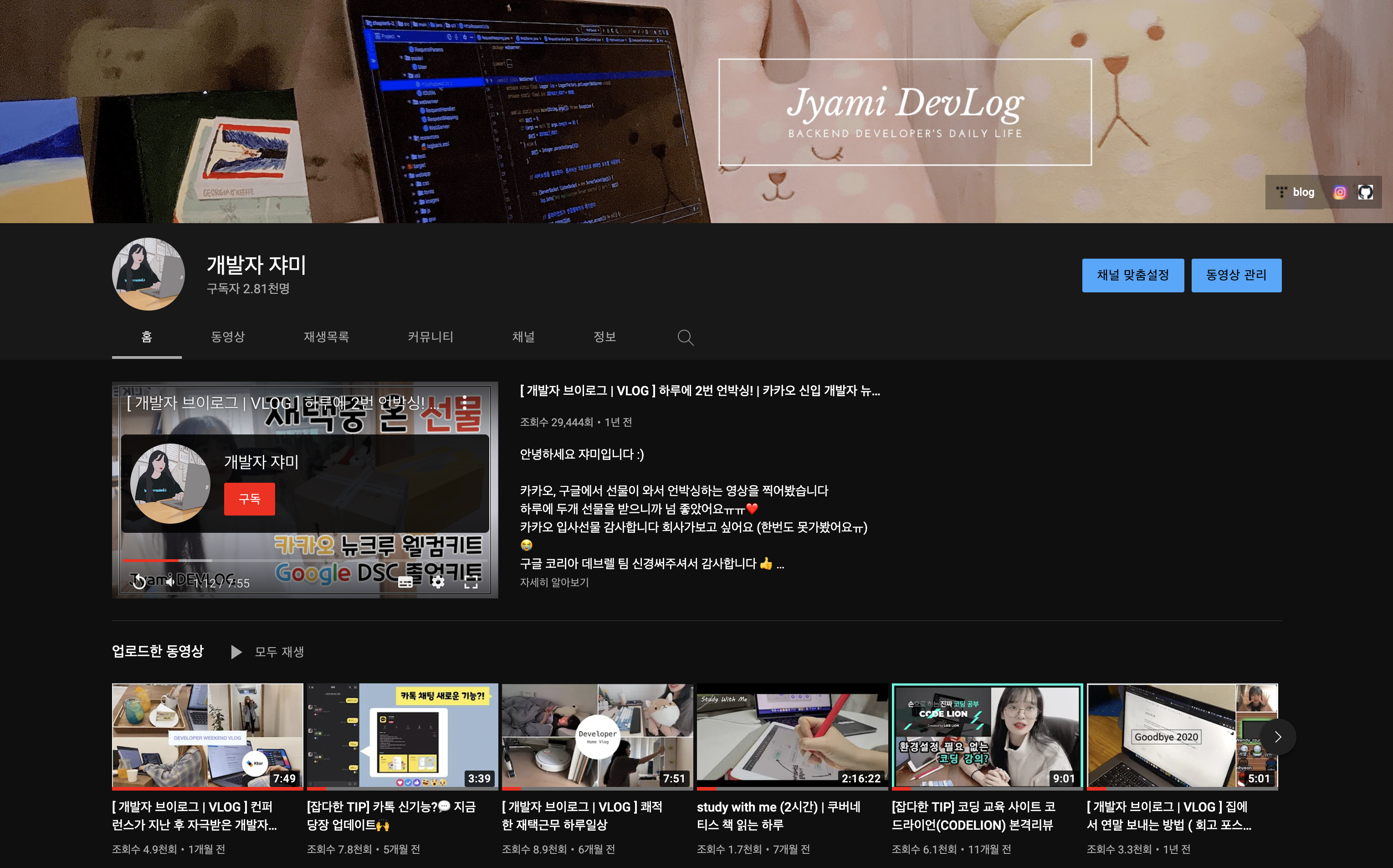
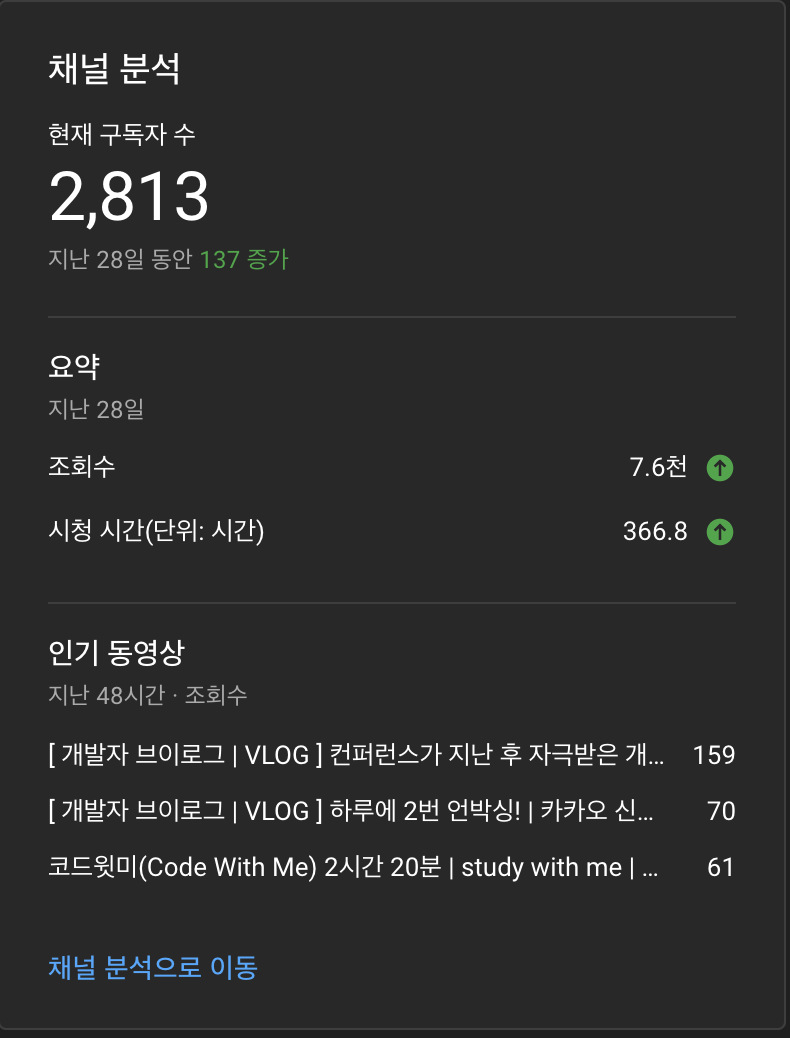
유튜브는 한달에 한번을 목표로. 블로그는 최대한 기술적인 것들 위주로 쓰고 싶었는데 부진했다. 뭐 어쩔수 없지, 현생을 살면서도 이만큼 챙긴게 어딘가!! 흠흠 유튜브는 (22년 1월 16일 기준) 2813명의 구독자가 생겼다. 정말 소소한 VLOG 동영상만 올리는데도 다들 좋아해주셔서 신기하다. 정작 나는 유튜브는 정말 킬링타임용 및 힐링용으로 예능(더지니어스, 크라임씬, 워크맨 , 문명특급), 게임(파카, 쌀튜브, 여왕럭스) 이런류만 보는편이라 나는 브이로그를 안보는 유튜버다..! (당당)🙄
회사분들이 유튜브 수익 물어보시는데 없다. 유튜브 수익을 얻으려면 구독자 1000명이상 시청시간 4000시간 이상이어야하는데, 내가 영상을 많이 올리지 않아서 시청시간이 부족해서 광고수익이 없다. 아 그런데 상반기에는 멋쟁이사자처럼, 마스슬립에서 협찬 및 광고 제안을 해주셔서 관련 영상을 찍었었는데, 이렇게 협찬을 받고 제작하는 영상은 뭔가 일이 되는 느낌이라 유튜브 영상 올리는게 재미가 없어져서 그 이후부터는 모든 협찬을 거절하고있다. 개발 관련 제품 요청이 아니면 앞으로도 화장품이나 등등의 잡화 요청은 거절할 것 같다ㅋㅋ (뭔가 전자제품이나 파우치 이런거는 유용하지 않을까 싶기도🤔)
유튜브 스튜디오를 보면 분석 전략이 나오는데, 여기 보면의외로 코드윗미가 재생이 많이된다. 그래서 뭔가 나도 다른 코드윗미처럼 이쁜 인테리어 이쁜 조명으로 올리고싶은데..! 음 나는 인테리어가 그렇게 어렵더라;;; 뭔가 내가하는 인테리어는 감성이 부족함 좀더 연구해보겠다😵💫 시청자 층은 아무래도 개발자들이 많이 보는지 연령으로는 18~34세가 성별으로는 2:1(남:여) 이더라. 판교뚜벅초(아 진짜 좋아하는 유튜버다 영상이 너무 재밌음), 조코딩, 노마드 코더 유튜브로 흘러들어오는 사람들이 많은듯.
2-2. 블로그

블로그는 사실 올 한해 책을 읽은 달이 훨씬 더 많은데, 책내용을 정리해두긴 했으나 뭔가 내가 정리해둔 정리본을 다시 보기다는 그냥 한번더 읽지 라는 생각이 요즘 들어서 깃에만 저장해두고 블로그에는 따로 정리해서 안올렸다. 그러다보니 블로그에 올라오는 글이 현저히 줄어들었다. 그래서 블로그 인기 글이 대부분 회고록/ 취뽀기 인데,, 흐음 기술 글보다 회고록이 인기가 많은 개발자 블로그라니 🙄이게 맞나? 파트에서 일하면서 ansible이나 이것저것 정리해보고 싶은 주제가 몇개가 있는데 아 주말에 블로그 쓰기/ 유튜브 편집하기가 정말 쉽지않더라 직장인에게 꿀같은 주말이기 때문에…😘 22년에는 시간을 좀 내보는걸로 하자.
아근데 생각해보니, 내 블로그가 아니라 회사블로그에 글을 썼다.ㅋㅋㅋㅋ 카카오 테크 블로그에 내 글이 있다는게 뿌듯하기도하고.. 한번쯤은 해보고 싶었는데 유관부서에서 먼저 요청이 왔다 하핫. 글은 아래에 있다.
https://tech.kakao.com/2021/05/24/jyami/
뉴크루의 카카오 백엔드 개발자 이야기
안녕하세요, 톡플랫폼개발팀 톡메시징파트의 신입 개발자 쟈미(jyami)입니다. 저는 자바, 코틀린을 좋아하는 백엔드 개발자이고, 카카오에 들어온 지는 약 반 년이 되어갑니다. 제가 카카오에 입
tech.kakao.com
https://tech.kakao.com/2021/10/25/grace-hopper-celebration/
Grace Hopper Celebration 참가기
카카오에서는 크루의 주도적인 성장과 역량 향상을 위해 글로벌한 인사이트 확대를 경험할 수 있도록 해외 컨퍼런스 참관 참여를 지원하고 있습니다. 안녕하세요, 톡플랫폼개발1팀의 jyami입니
tech.kakao.com
위에있는 뉴크루의 백엔드 개발자 이야기가 당시에 페북에서 공유가 엄청 많이 되었던 기억이 있다. 확실히 취업/신입 개발자 관련 주제는 엄청 핫한가 보다. 다음에 회사블로그에 또 글을 쓴다면 그건 꼭 기술에 대한 적용기 이야기를 쓰고 싶다. 그동안 너무 커리어적인 글만 양산한거 아닌가 싶어서 내가 과연 기술적으로 성장하였는가? 라는 고민이 있었기 때문이다.🙌 (근데 요즘 공부를 안함…흠…)
2-3. 외부 인터뷰
상반기에 이곳저곳에서 인터뷰가 생각보다 많이 들어왔었다. 다 비슷비슷하게 취업기 관련 커리어 글이었는데, 학교에서도 들어오고 대학 잡지, 기술 뉴스레터 등 다양한 곳에서 나의 이야기를 담아주셨다.
http://inews.ewha.ac.kr/news/articleView.html?idxno=32531
선배들의 따끈따끈 ‘취뽀’ 성공담 – 카카오(Kakao) 개발자 편 - 이대학보
코로나19의 여파로 취업 시장이 얼어붙었다. 청년층의 실업자 수는 2017년 이후 최고치를 기록했다. 이런 취업난에도 최근 다양한 분야에 취뽀(취업뽀개기)한 이화인들이 있다. 본지는 이들의 이
inews.ewha.ac.kr
https://maily.so/1step/posts/4a440c
📑 IT 대기업 입사는 공채만이 답?
프로합격러가 들려주는 주니어 상시채용 취준 꿀팁
maily.so
http://www.campl.co.kr/contents/content_read.asp?idx=10483
“하고 싶은 건 다 해보고, 끊임없이 배우는 것이 중요해요” 카카오톡 김민정
캠퍼스플러스
campl.co.kr
3. 스터디
신입일 때는 이것저것 막 공부해야하는거 아닌가 싶어서 상반기 하반기 모두 채찍질 하면서 스터디를 생각보다 많이 했던 것 같다. 그런데 지금 되돌아보면 이것저것 일을 벌리면서 스터디를 하는 것 보다 정말 관심있는 것 몇가지만 집중해서 하면 좋았을텐데라는 아쉬움이 있다. 현재는 스터디를 이것저것 했지만, 그 시간을 헛으로 보낸 것 같다는 느낌이 들어서 전부다 그만두고 쉬고있는 상황이다. 내가 공부하고 싶을 때 하고, 스터디를 시작한다면 상황적으로 여유가 될 때 하나만 집중해서 하고싶다.
3-1. Next Step Effective Kotlin (2월 ~ 3월)
혼자서 코틀린 인액션 책을 읽었는데 챕터 5까지 정도밖에 안읽고 실제로 쓸 일이 없으니까 코틀린을 적당히 자바 문법이랑 호환되는 부분만 사용할 줄 알지, 실제 코틀린 문법을 알고 적절하게 사용하고있다는 느낌이 안들었다. 그래서 자바봄에서, 우아한 프리코스에서 했던대로 코틀린을 써보면 좀 더 익숙해지지 않을까 생각해서 넥스트스텝 교육을 신청했다. 리뷰를 받으면서 내가 몰랐던 코틀린 문법이나 패턴들을 알게된 건 좋았으나, 퇴근하고 미션을 수행하는게 정말 쉽지않더라.. 그래서 미션 4개중에 2~3개 정도까지만하고 완수는 못했다. 그래도 리뷰 받은 내용들이 모두 도움이되는 내용이었고, 감사했다. 따로 다시 공부해야하는데… 이번에 코틀린 관련 업무를 시작하면서 좀 더 봐야겠다.
https://edu.nextstep.camp/c/Z9QeJlCi/
이펙티브 코틀린(Effective Kotlin) with TDD, Refactoring, Clean Code
edu.nextstep.camp
3-2. 자바봄
대학교 3학년때부터 하던 스터디이다. 사실 이 스터디 덕분에 자바를 좀더 집중적으로 공부할 수 있었고, 취업할 때 덕이 컸다고 생각한다. 모든 인원이 전부 취업에 성공하면서 배민2 / 네이버 / 카카오 / 마리트 이렇게 모두 직장을 갖게되었는데, 그럼에도 나름 꾸준히 올해도 책을 조금씩 읽어나가면서 서로 질문하고 답변하고 찾아보는 형식의 스터디를 계속해서 진행했다. 자바봄에서 올해 했던 책 리스트에 대한 건 아래 링크에서 볼 수 있는데, 어느 순간 이 리포가 스타 200을 넘어섰다!! 다들 열심히 정리하고 관리하는 레포지토리라서 많은 사람들이 참고한다는 점에 되게 뿌듯하고 신기해했던 기억이 있다.
https://github.com/Java-Bom/ReadingRecord
GitHub - Java-Bom/ReadingRecord: 📚 책 읽고 정리하기 📚
📚 책 읽고 정리하기 📚. Contribute to Java-Bom/ReadingRecord development by creating an account on GitHub.
github.com
자바봄에서는 총 3가지 책을 했는데, 각 책에 대한 느낌은 아래와 같다. (괄호에 들어간 이름으로 issue 라벨을 관리중이다.)
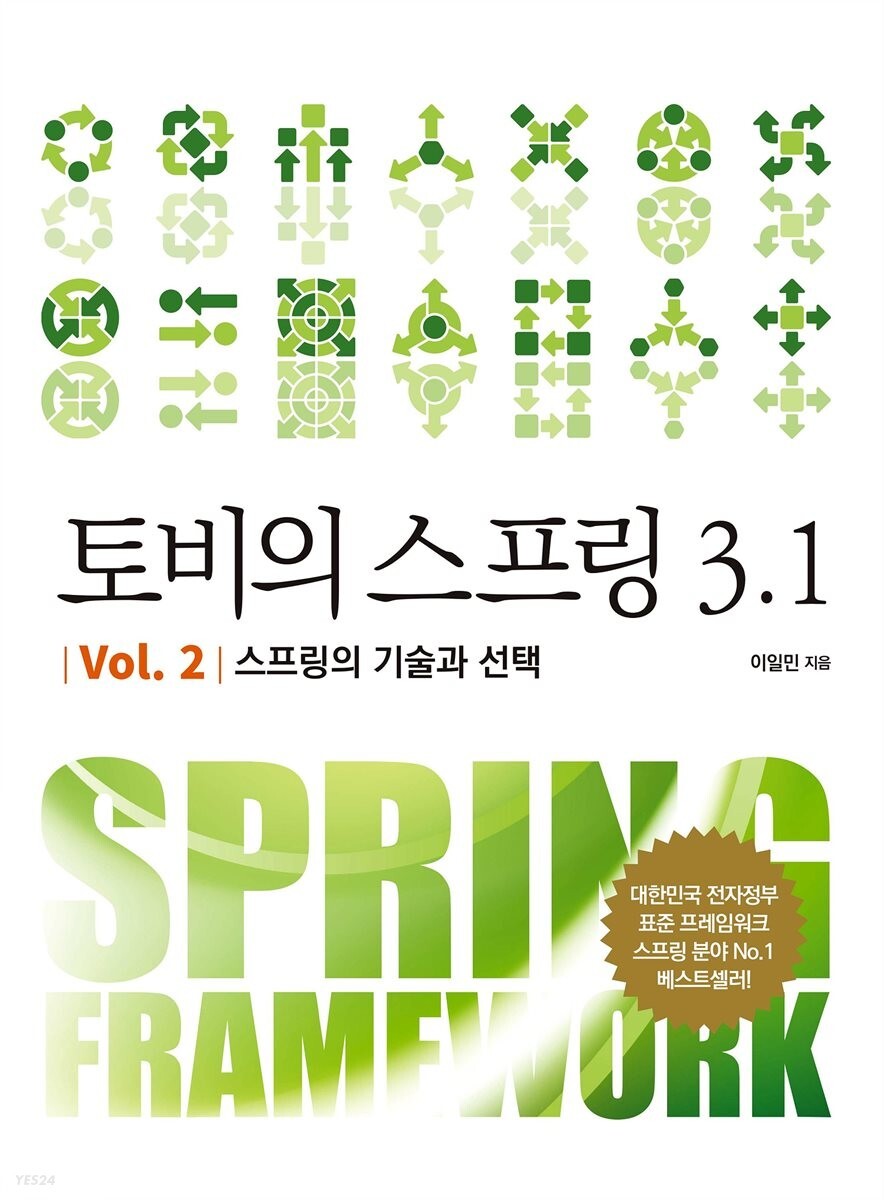


- 토비의 스프링 (Spring of Toby) : 확실히 스프링을 하는 개발자라면 한번은 읽어 봐야하는 책이었다. 대충 읽고 넘어간 부분도 있고, 집중해서 읽고 넘어간 부분도 있었는데, 이 책을 다시본다면 그때는 스프링 내부 코드와 함께 봐야겠다는 생각이 들었다. 다만 이번에 책을 읽을 때는 호흡을 길게 가져가면서 읽어서 이전에 읽었던 내용도 까먹고 넘어가고 했던게 종종 있었다. 앞으로는 두꺼운 책이라도 호흡을 짧게 가져가면서 읽고싶다. (쉽지않겠지만..)
- 쿠버네티스 입문 (Kubernetes introduction) : 음 개인적으로 재미없었다. 이책 읽은 것중에 쿠버네티스 구조 부분 좀더 보고싶어서 쿠버네티스 인액션이랑 공식문서 함께 보면서 혼자 정리한 부분은 재밌었는데, 그 외에는 yml 다 따라치면서 어떤 기능이 있다 소개하는 거였기 때문이다. 나는 아무래도 이미 쿠버네티스를 사용해본적이 있다보니 yml 작성하면서 각 오브젝트의 기능을 소개하는 부분은 이미 알고있는 내용이라 그랬을수도 있다. 그래서 쿠버네티스 입문 책보다는 이후에 읽은 쿠버네티스 인액션 책이 좀 더 재밌었다. 그치만 쿠버네티스를 배워본적이 없어서 핸즈온랩처럼 따라하면서 가고싶다면 이책도 나쁘지 않은듯?
- 스프링 배치 완벽 가이드 (Definitive Guide to Spring Batch) : 이 책을 읽으면 좀 더 스프링 배치를 잘 짤 수 있지 않을까 라는 기대로 시작했는데, 정작 소득이었던건 배치 repository 구조를 좀 보게된 것 정도인 것 같다. 내가 리딩을 하지 않으면 적당히 책을 읽고 넘어갔었기 때문이다. (이때 쯤부터 책읽는걸 조금 힘들어했었다.) 배치 인터페이스를 소개하면서 각종 구현체들에 대한 설명까지 간략하게 나와있는데, 이런게 있구나 하고 알고 넘어가고 사용할 때 직접 써보지 않는다면 잘 와닿지 않는다는 느낌이 있어서 그랬던 것 같다. 역시 책만 읽기보다는 직접 코딩 해보면서 감을 잡아보는걸 좋아하는 타입이다. 그러나 사용하고 싶은 구현체가 있다면 이 책으로 간단히 개요를 보고, 스프링 배치 공식문서를 본다면 빠르게 파악하고 넘어갈 수 있을것 같다.
지금은 자바봄 스터디를 멈춘 상태이다. 다들 일이 바쁘고, 의욕이 안살아서 조금 휴식기를 가지기로했다.
3-3. 설계 스터디 (8월 ~ 11월)
- 가상 면접 사례로 배우는 대규모 시스템 설계 기초
GDSC로 알게된 정동오빠가 주도해서 하게된 스터디이다. 아예 인연이 없는 새로운 개발자 분들과 스터디를 하게 되었고, 배민 / 토스 / AWS / 카카오 조합으로 책을 봤다. 다양한 회사의 사람들이랑 이 책을 읽었을 때 좋았던 점은 각 회사 본인의 도메인에서 봤던 설계에 대해서, 실제로 어떻게 사용하고있는지 경험담을 들을 수 있던게 좋았다. 이 책 내용이 조금 대략적으로 간단하게 설계에 대한 이야기를 하고있는데, 책의 내용으로는 가벼울 수 있는 내용을 각 구성원들의 경험과 지식으로 채우면서 생각보다 재밌었다. 이 스터디를 하면서 위에 말했던 애플리케이션 코드의 중요성 뿐만아니라 설계에 대한부분도 좀더 보는 개발자가 되어야하지 않을까? 라는 생각을 하게되었다.
정동오빠가 설계 관련해서 공부하기 좋은 아티클 링크나, 유튜브 영상 링크를 보내줬는데, 올해중에 맘잡고 전부 싹 훑어보고 블로그에 하나씩 업로드하는게 목표이다. 이 책을 읽은 것 만으로는 조금 빈약한 부분이 있었기 때문이다. 그리고 이 책을 읽으면서 면접에서 서버당 TPS 이런 수치들은 어떻게 추측할 수 있는지 우리파트 시니어 개발자 분께 여쭤봤는데 경험의 영역이라고 한다. 그래서 파트에서 사용하고있는 서버의 대수나 그에 대비하는 TPS, 구조를 좀 더 기억하거나, 정리하는게 중요하다는 인사이트를 받을 수 있었다. 실제로 파트에서 장애나, 연말대응같은 빅 이벤트에서의 회고를 진행하면서 여러 수치적인 지표를 한번 더 짚고 넘어가고 있는데, 할 때마다 되게 좋긴하다.

3-4. 책 스터디 (1월 ~11월)
GDSC로 알게된 원범오빠가 본인의 대학 친구들하고 하고있는 스터디이다. 왜하게된건지 기억은 안나는데, 이 스터디는 자바봄과는 다르게 엄청나게 짧은 주기로 책을 읽고 리뷰한다. 책 한권을 잡으면 일주일에 2번 모이고, 각 모일때마다 한챕터씩 읽어야한다 (약 60~70페이지 분량). 기존에 책을 널널하게 읽는데에 익숙해져있어서, 하루에 한 챕터 읽기도 힘들어했던 내가 (소설아니면 책읽는거 진짜 싫어한다 원래). 그냥 하루에 열심히 한 챕터 정도는 읽어보자하면서 변화하게 되었다. 그러다보니 생각보다 많은 책을 읽을 수 있다는 점은 좋았지만, 집중해서 보고싶은 부분을 시간에 쫓겨서 넘어간 적도 많았었다.
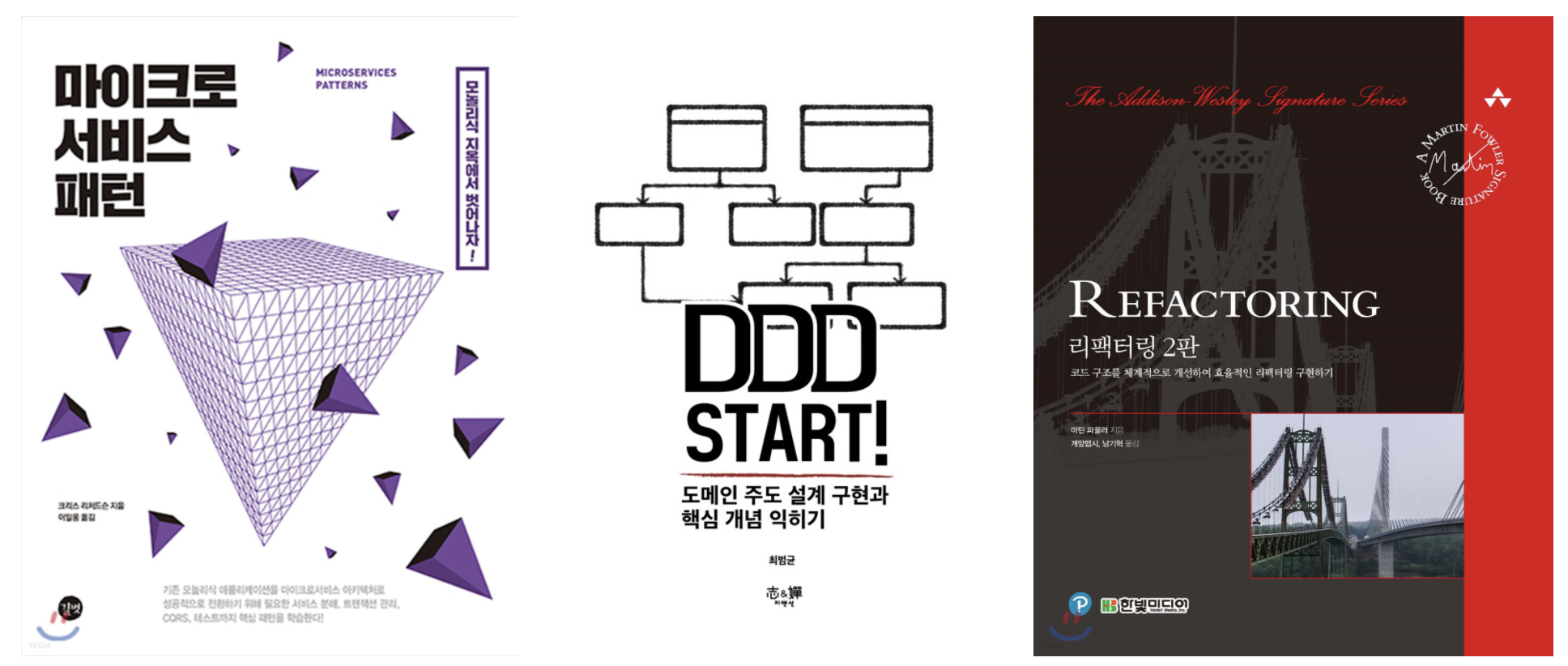

- 마이크로 서비스 패턴 : 가장 맨 처음에 읽었던 책이라서 기억이 잘 안난다ㅠㅠ 그런데 되게 여러가지 패턴이나 도식도를 보면서 최대한 내가 알고있는 예제들과 적용시키면서 이해하려고 했던 기억이 난다. 아무래도 파트에서 이미 적용하고 있는 부분도 있고, 아닌 부분도 있어서 이런 이해 방식이 가능했던 것 같다. 가장 어려웠던 부분은 아무래도 분산 트랜잭션 부분이었다.
- DDD Start : DDD를 모르는 스터디 원들도 계셨기에 앞에있는 MSA 책 이전에 이 책을 읽으면 좋았겠다 싶었다. 좋았던건 내가 그동안 객체지향이라고 부르던 것들이 애그리거트 / 도메인 / 도메인 모델 등등 특정 단어로 명명되고 있다는 걸 알게되었다는 점이었다. 이 책을 읽기는 했지만 나는 DDD를 하고있는가? 라고 제대로 알고 사용하고 있는 것 같지는 않다고 대답할 것 같다. 위에서 말한 용어들을 의식적로 인지하고 구현하고 있지 않기 때문이다. 책 자체는 엄청 쉽게 설명이 되어있어서 말 그대로 DDD를 시작하는 사람이 읽으면 좋을 것 같다.
- 리팩터링 (2판 사진을 올렸으나 자바로 되어있는 1판을 읽었다.) : 파트에서 리팩터링 과제를 맡고있어서 이 책을 읽으면 엄청 도움이 되지 않을까? 기대를 하고 봤는데 사실 조금 실망인 부분도 있었다. 여기서 소개하는 일부 패턴 및 전략들이 intellij ide로 대체가 가능 한 것들이 있었는데, 옛날 책이라 어쩔 수 없는 것 같다. 그러나 개발자 교양서라고 부르는건 인정.
- 쿠버네티스인액션 : 쿠버네티스 yml을 짜기는 하지만, 좀더 깊게, 혹은 구체적으로 알지 못했던 부분을 하나씩 추가하는 느낌이라 좋았었다. 그러나 뒷부분으로 갈 수록 사용을 안해본 오브젝트이거나 하는 경우에는 이해나 응용을 떠오르기 어려웠었다. 근데 etcd, api 서버, kubelet 등 쿠버네티스 구조와 관련된 컴포넌트들을 이 책을 통해 열심히 봤었다.
- 데이터중심 애플리케이션 설계 : 아 진짜 어려웠다. 이 책이랑 대규모 시스템설계 기초 책을 함께 봤었는데, 그러다보니 더더욱 분산 시스템 설계의 중요성에 대해서 공부해봐야겠다고 생각이 들었던 때가 이 때쯤이었다. 아근데 진짜 어렵다. 책의 모든 내용이 나에게 도움이 되진 않았고, 한 앞에서부터 2/3 지점까지가 굉장히 좋았다. 뒷부분은 하둡, 스파크 등 데이터 분석에 대한 내용이었는데, 아무래도 관심이 가질 않았기 때문이다.
이 스터디역시 마무리했다. 올해 스터디를 전부다 책 스터디만 하면서 스터디 시간으로 인해 책만 읽고 실제 코드로 구현을 해보거나 더 찾아본다거나 하는 일이 없었어서 조금 현타가 왔었다. 그래서 지금은 전부다 그만둔 상태! 리프레시 하고 다시 원하는 공부를 하는걸로 하자.
3-5. 사내 스터디

- redis 스터디 : 사내 스터디로 파트 대부분의 분들이 참여했었는데, 여기에서도 redis-cluster를 k8s helm과 함께 사용하는 방법에 대한 발표를 내부적으로 진행했었다. 이때 bitnami 레포를 분석하면서 분석한 내용을 바탕으로 내부적으로 어떤 명령어들이 실행되어서 이런 설정들이 가능한지를 발표했었다. 그러나 현재 파트에서 진행하는 redis-cluster 전환 작업은 참여하고있지는 않다. 전환 작업을 하고계시는 분들의 진행과정 발표를 들었었는데, 공부한 내용을 직접 적용하기 위해 많은 것을 공부하고 설정값 확인부터 모니터링까지 모든 것을 염두하기 쉽지않을텐데 정말 대단하시다고 생각했다.
- UNIX 고급프로그래밍 : 내가 입사하기 9개월전에 입사하신 주니어 개발자 분과 둘이서 하고있다. 아무래도 우리 파트 코드중에 C로 되어있는 코드가 있어서 이 책을 읽으면 조금 진입장벽이 낮아지진 않을까?! 기대를하면서 이책을 시작하게 되었는데. 엄.. 어렵다. unix에서 사용하는 함수나 용법에 대한 설명이 있어서 와닿기 어려울 때도 있고, 어쩔때는 운영체제 수업, 컴퓨터 구조 수업을 잘 들어둘껄 생각도 든다. 그래도 회사 분이랑 함께 시작 한 스터디니까, 어찌저찌 끝마추지 않을까
3-6. 외에 개인적으로 본 책


- 네티 인액션 : 이전에 내가 검증형계약직에서 정규직으로 전환될 때 했던 과제가 네티가 필요해서 읽었었다. 그런데 인턴분이 진행하신 프로젝트 역시 네티를 사용해서 코드리뷰와 적절한 가이드를 위해 한번 더 이 책을 읽었다. 한번 읽으면 슈루룩 읽는데 뭔가 응용해서 짜보려하니 쉽지 않았다.
- 코틀린 인액션 : 읽다가 말았다ㅠ 책을 읽는거에 그치지 않고 책에 있는 예제를 하나하나 따라해보고 실행해보아야 온전한 내 것이 될 것 같아서 눈으로 읽기를 그만두었으나. 다른 책 스터디에 밀려서 우선순위가 후순위가 되었다.
- redis 운영 관리 : 간단하게 읽기 좋은데 진짜 꿀팁만 담겨져 있다. 100페이지도 안되서 더 좋다. 간략 정리글은 내 블로그에 있다 : https://jyami.tistory.com/141
- 프로그래머의 뇌 : 요즘 읽고있다. 개발 책만 읽는게 힘들어서 개발 인문학(?) 느낌으로. 근데 읽다보니 내 뇌가 마치 컴퓨터처럼 되어있나라는 생각이 든다. 사람의 기억을 램과 디스크와 CPU로 비유해서 서술한다.
4. 이화여대
4-1. 토익과 졸업
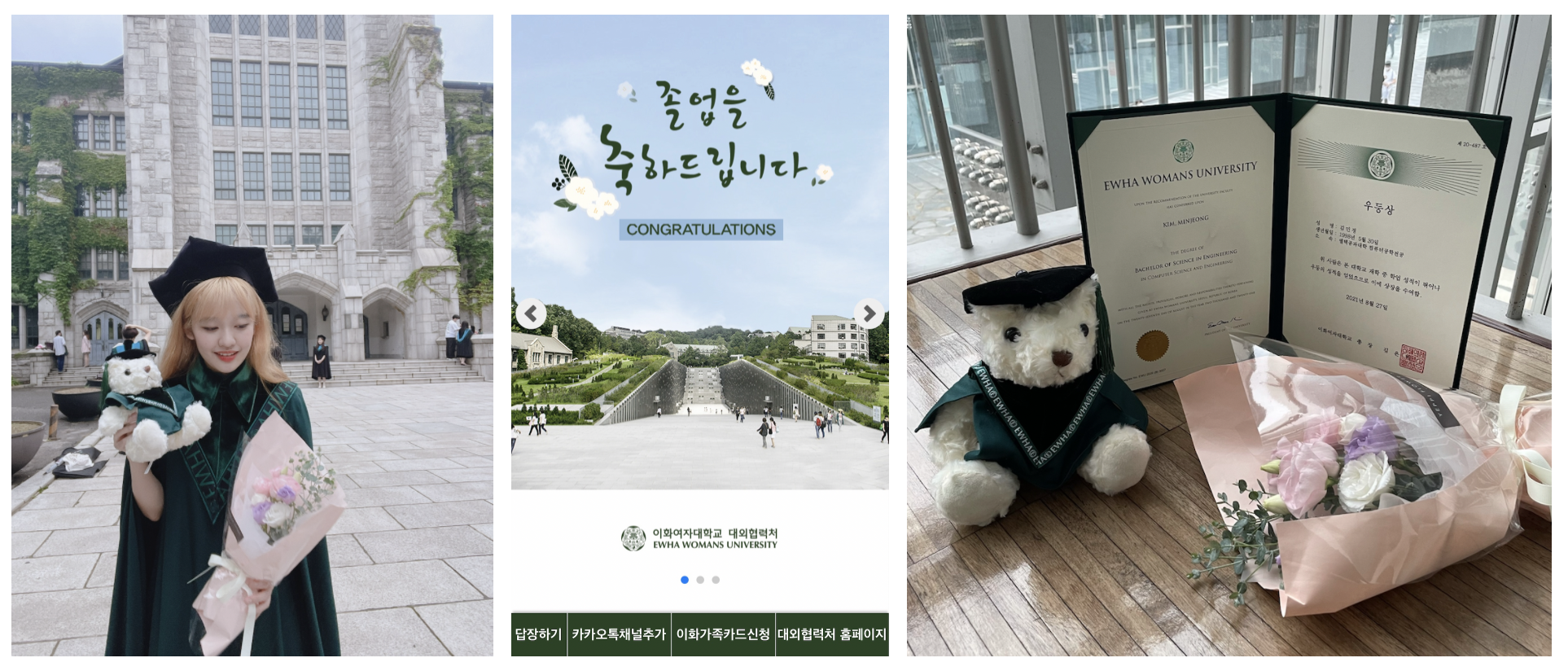
졸업했다!!! 드디어!! 토익 졸업 자격 요건 때문에 졸업을 못할 뻔 했는데 이것도 통과했다!!! 사실 원래대로라면 20년 말에 토익을 보고 21년 2월 졸업을해서 바로 칼졸업을 하는게 베스트였는데, 20년 말에 카카오 정규직 전환 인터뷰를 준비를 하면서 학교 졸업요건들을 잘 챙기지 못했었다. 그래서 유예하고 21년 8월 졸업을 노렸었는데.. 이것 역시 까먹고 얼레벌레 살다가 한 6월쯤 되서 생각나서 토익 점수 마감일 계산해서 공부를 딱 2주 할 수 있는 시간이 있었다.
원래 20년 말에 노베이스로 토익을 그냥 공부 안한 상태로 봤을 때 565점이었다. 그런데 졸업을 위해 700점을 2주만에 맞춰야하는 상황이었다..!! 미리 공부좀 해두었으면 좋았을걸, 나중에 나중에 미루다가 2주동안 공부해서 135점을 올려야하는 상황이었다. 그래서 당시에는 9시 출근 6시나 7시 퇴근하고 밥 먹고 10시 11시까지는 토익공부에 집중하고 힐링을 위해 롤 1~2시간 정도 하는 삶을 살았었다. 그렇게 해서 결국 나온 결과는 710점. 영어공부 목적이 아니라 정말 졸업만을 생각하고 달렸었기 때문에, 700점만 넘으면 되서 더도말고 덜도 말고 딱 2주동안 해서 700점 넘었다는게 너무 좋았다 (더 공부했으면 억울할 뻔)
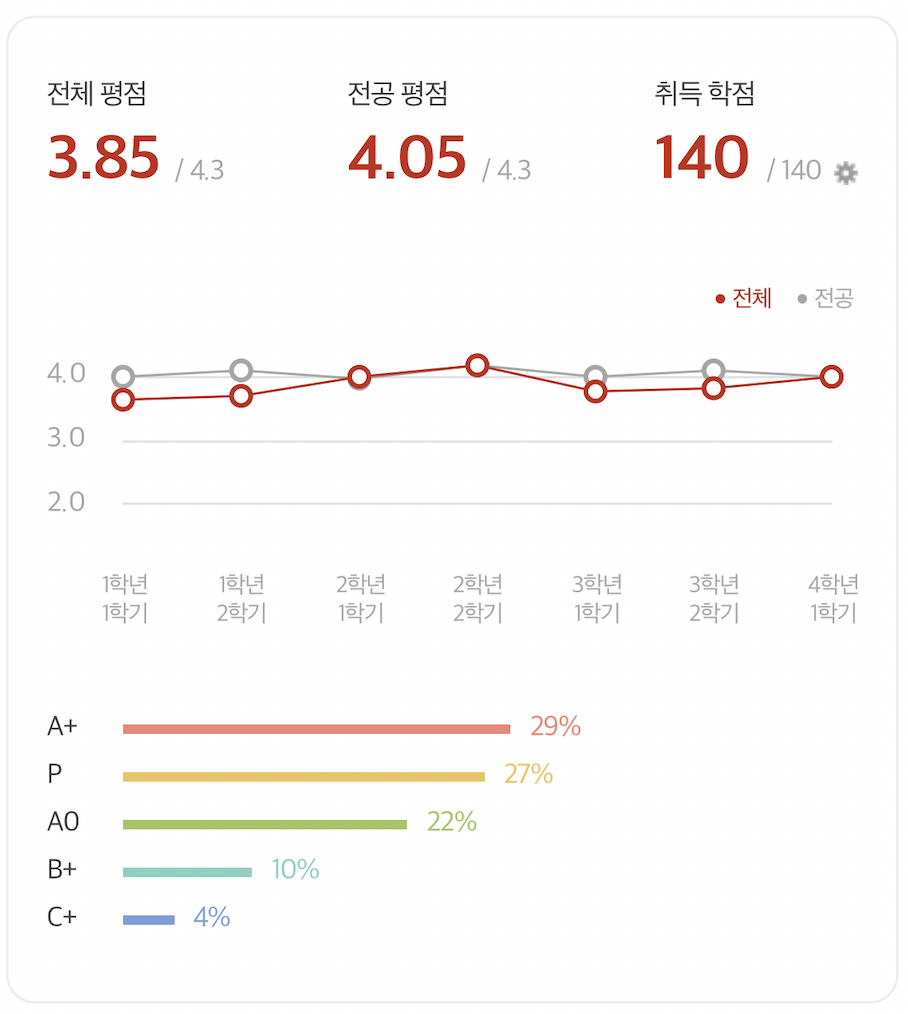
그렇게 진짜로 졸업했다!! 우리학교 기준 평점 4.3 만점 3.85 학점으로 졸업을 할 수 있었다. 학점에 대한 비결은,, 나는 전공을 좋아해서 전공 학점은 거의 A대 였다. 그래서 전공을 늘리고 교양을 줄였는데, 교양은 대부분 패논패로 처리해서 최대한 전공학점이 반영이 되게 학점관리를 했었다. 그래서 전공학점을 기준으로하면 4.3 만점 4.05 학점이다. 나름 학교 생활을 성실하게 했다는 지표이기 때문에 이력서에도 열심히 넣었었다. (아.. 이력서 업뎃도 해야하는데..)
4-2. 학관 리모델링 재건축기금 기부
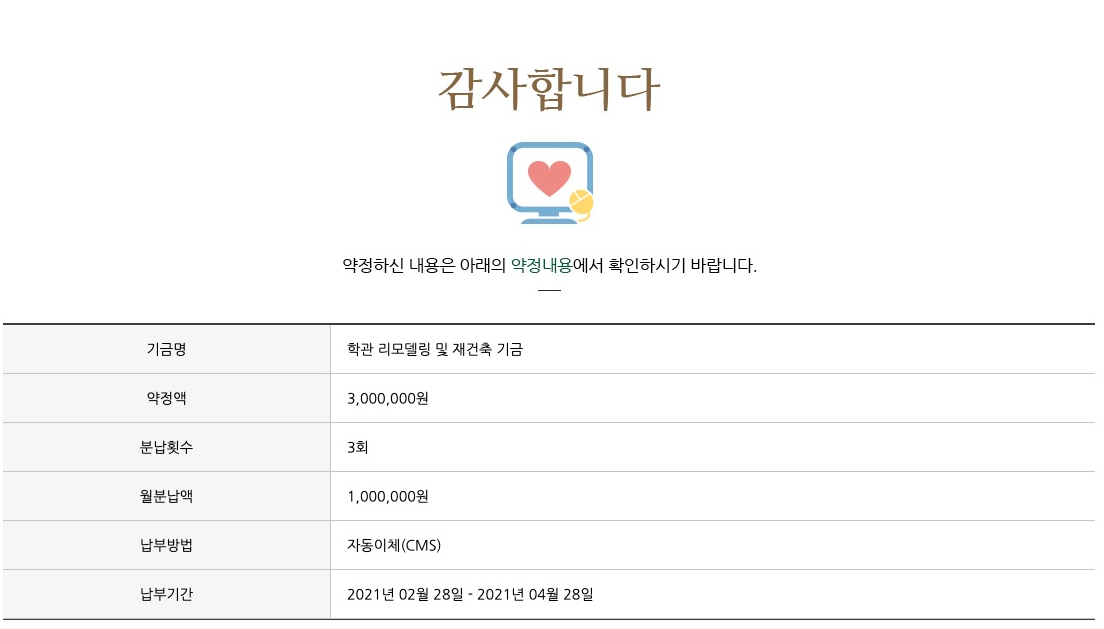
작년 2월 학관 리모델린 재건축기금 기부를 받는다고해서 이제 막 월급 따박따박 받는 사회초년생이 된 기념으로 바로 300만원 기부를 했었다. 후원자 기념판 이름에 등재된다고 해서 매우 기대가 된다. 학교에 기부해서 내 이름이 학교 어딘가에 걸려있는게 나름의 버킷리스트였는데, 당시 기회가 있을 때 잡자! 생각해서 일단 신청은 CMS로 했는데.. 다음날에 대외협력처에 바로 전화해서 그냥 일시불로 입금했던 기억이 있다. 지금처럼 당당하게 나를위한 삶을 살 수 있게 된게 우리학교를 다닌게 영향이 분명히 있고 학교에 애정이 있기 때문에 꼭 해보고 싶었다.
5. 일상
5-1. 운전 면허
5월인가 운전 면허를 땄다. 그동안 돈이 없다는 핑계로 못했던 거였는데, 직장인이 되고 일상, 수익이 안정되니까 이제 한번 해볼까? 하고 도전하게 되었다. 필기 기능 도로주행 모두 실패없이 한번에 통과했다!!! 그런데 지금 사는 곳이 교통이 좋아서 딱히 자차가 필요가 없어서 그런데 정작 차는 없어서 장롱면허가 될 예정이다ㅋㅋ 캐스퍼가 막 출시됐을때 무리해서라도 차를 살까 하는 뽐뿌가 엄청 왔었는데, 그래도 정작 써먹을 데를 생각해보니 없는 것같아서 한 30살에 가까워 질 때쯤 사야지 생각했다.
아 면허를 따면서 웃겼던 기억은..ㅋㅋㅋ 나는 길치인데, 도로주행 길이 진짜 너무 안외워져서 그냥 길이나 내가 해야하는 행동을 종이에 적어서 다 외워갔다. 운전학원 유튜브에 도로주행 연습하는 영상이 있었는데, 그 영상으로 보면서 "신한은행 간판이 보이면 우측 깜박이" > "이후 사거리에서 우회전 (핸들은 빠르게 한바퀴)" 이런식으로... 친구들이 듣고 경악했다. 나중에 실제로 운전해야 할 때는 연수 제대로 받고 해야지..
5-2. 머리색 근황
그동안 살면서 탈색을 한번도 안했었다. 다들 염색한번 해보는 시기인 고3 수능 끝나고에는 “한국사람이면 그냥 검정머리가 제일 이쁘지” 이렇게 생각하고 머리를 해도 파마만 했었는데ㅋㅋㅋ 그냥 문뜩 올해 5월 지금 20대 초반일때 탈색 한번도 안하면 평생에 앞으로 할 일 없지 않을까? 하고 질렀다 그러고 지금까지 유지중이다. 탈색하고 헤어제품도 엄청 많이사고 발열현상이나 등등 미용사 쌤한테 들으면서 알게 된게 많은데, 확실히 머리색을 바꿀 때 기분전환이 잘 되었다. 내 머리가 발열현상이 잘일어나서 탈색을 3번했는데도 백금발 탈색은 어려워서ㅠ 애쉬그레이 같은 색은 제대로 색이 안나와서 주로 붉은 계열로 염색을 한다. 근데 이게 탈색을 하다보니 머리색이 옅어지는 것 같기도..? 앞으로 한 일년정도 더 유지해볼까 고민중이다.

5-3. 운동
재택근무를 하다가 어느순간 너무 오래 앉아있었는지 허리가 아파서 이제 슬슬 운동을 해야하나? 생각이 들었다. 재택근무를 위주로하니까 처음에는 의자를 시디즈로 바꾸는걸로 시작했는데, 그거와는 별개로 자취도하다보니 식습관이나 건강이 급 걱정이되었다. 작년 여름부터 계속 은님이 “조져지기 전에 운동하세요” 했었는데, 이러다가 조져지고 나서 운동하려나 싶어서 최대한 빨리 시작하자 하고 PT를 시작했다. PT를 하면서 아쉬웠던게 선생님이 많이 바뀌었던건데ㅠ 지금 하고있는 피티까지 다하면 40회정도되는데 선생님 변경만 3번이 있었다. 처음에 만났던 선생님이 잘맞아서 운동에도 재미붙이고 개인운동도 나가고하면서 20회를 결제했는데, 그 선생님이 퇴사를 하게되어서 7회는 중간에 다른 선생님이랑 하면서 또 적응하고, 새로운 헬스장으로 옮기면서 그 헬스장에서 다른 선생님이랑 지금 20회를 진행하고있다.
처음 받았던 쌤이랑 했을 때 매일매일 피티 받은 내용을 안잊으려고 쌤이 했던 조언들을 빼곡히 적어놨었다. 지금은 strong 어플을 사용하고있다.
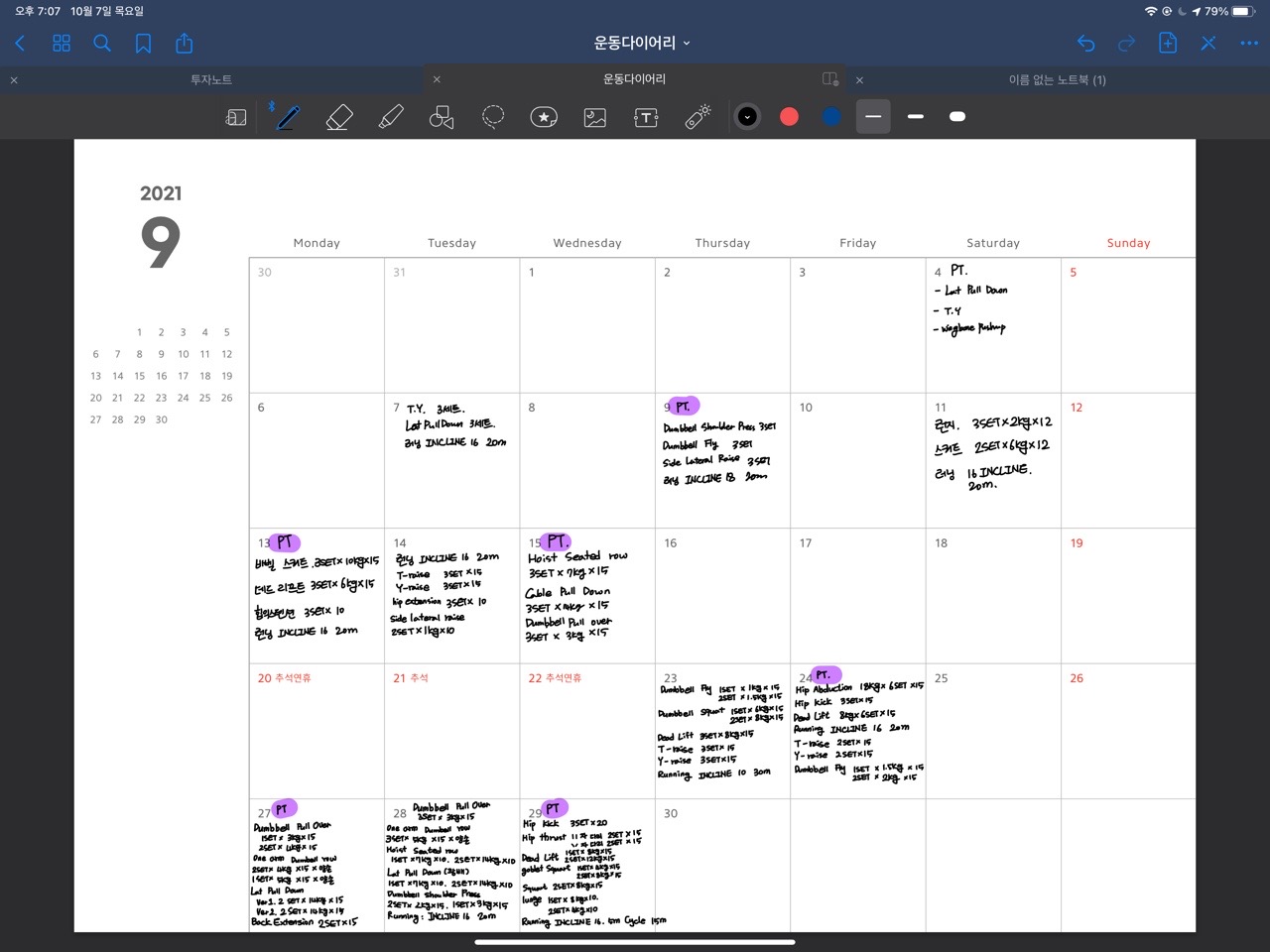
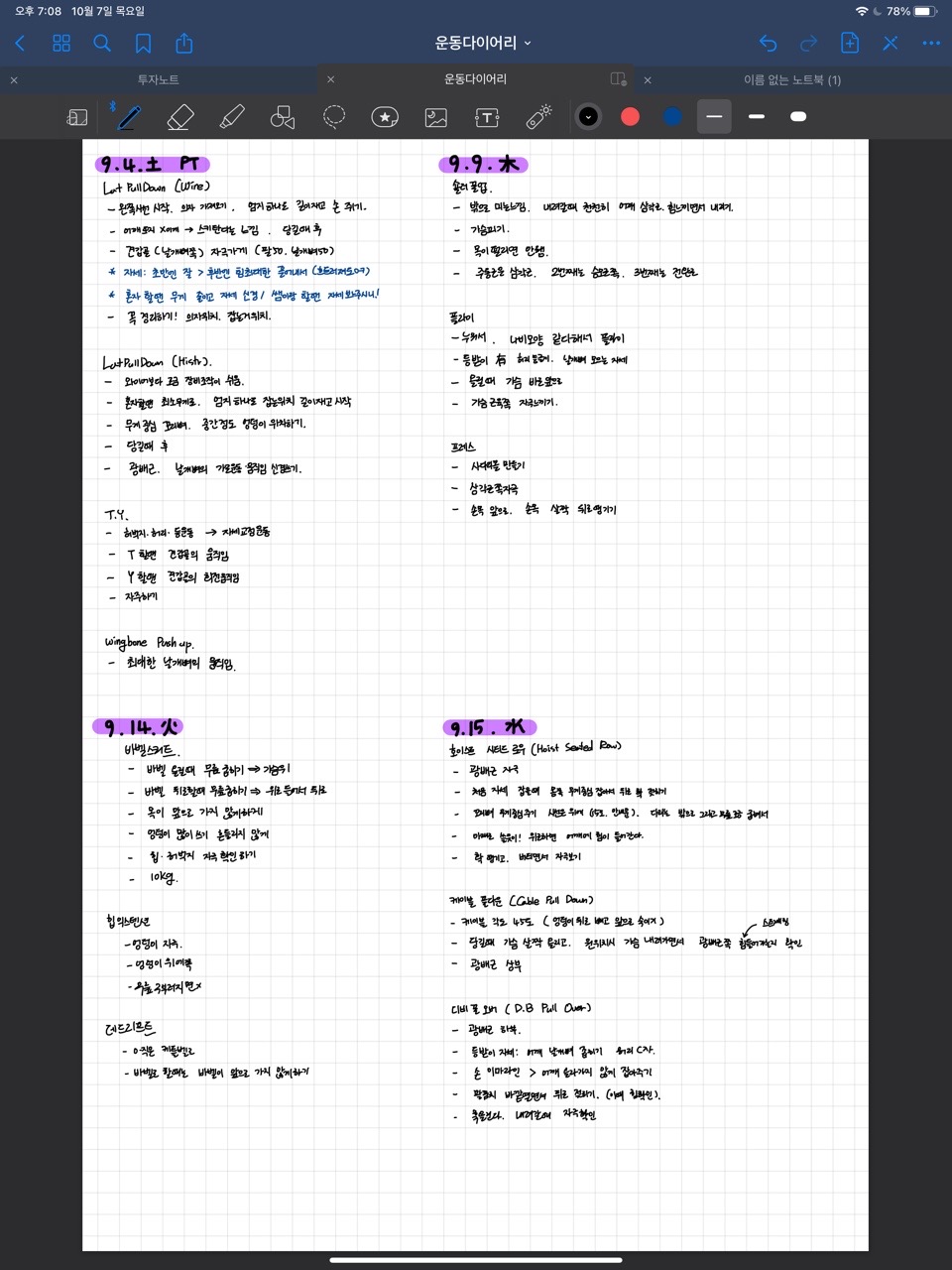
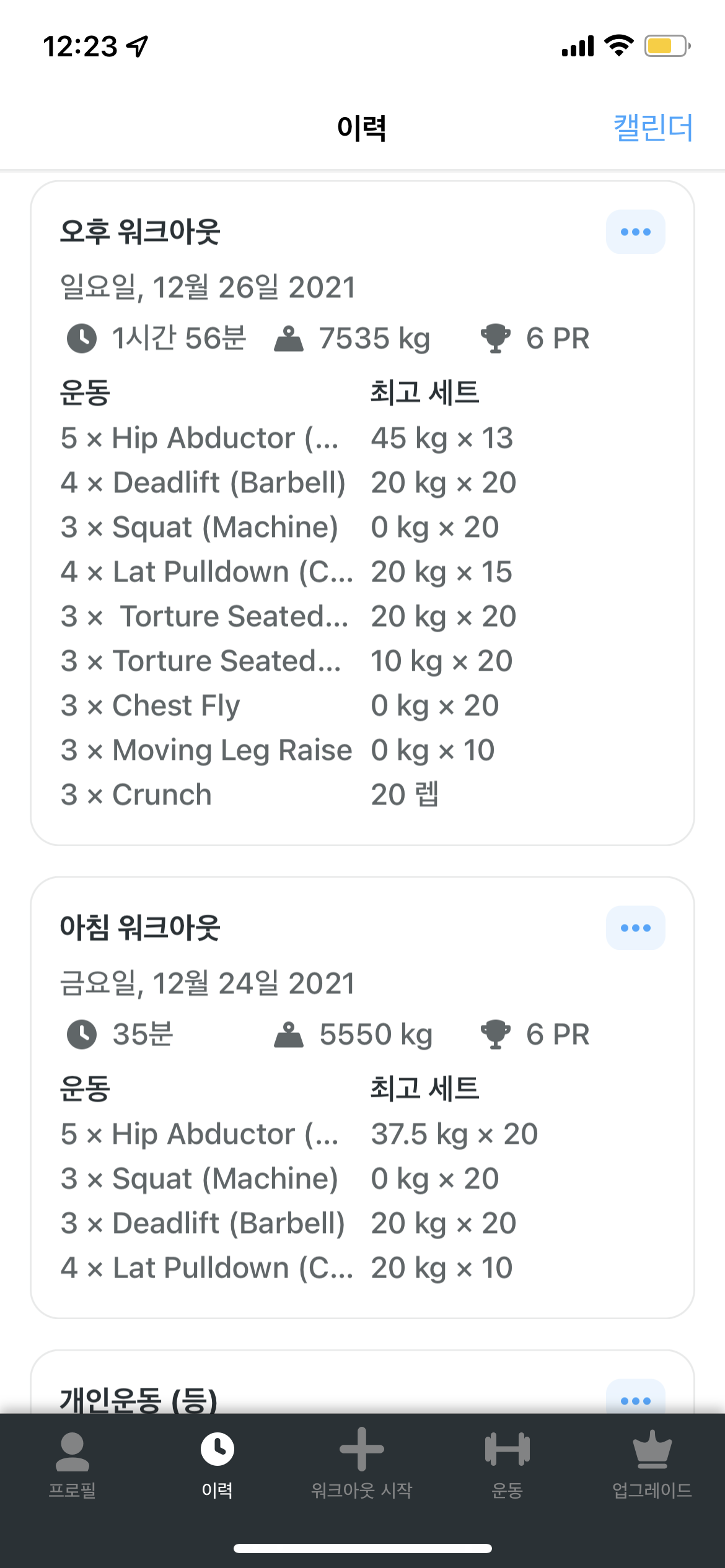
확실히 지금 근력이 처음보다는 나아지고 관심이 많아지고있다는걸 느끼고있긴한데, 처음받았던 선생님이랑 쭉했으면 좋았겠다 싶어서 너무 아쉽다. 처음에 맨몸스쿼트만 하던내가 지금 랙에서 40KG 바벨들고 스쿼트 하고있다는거 보시면 와 처음에는 이랬는데, 지금은 이렇네요 이러면서 같이 뿌듯해하고 좋아해주셨을텐데 싶어서 말이다ㅠ. 그래도 처음 만났던 그 선생님 덕분에 뭔가 목표를 하나씩 깨는 느낌이 좋았었고, 주변에 재연언니나 은님 등등 운동에 관심많은 사람들이랑 얘기하면서 더 알아보다보니까 운동하는게 생각보다 재밌다. 원래는 슬라임, 달팽이 소리하면서 운동 귀찮아아 이러고 다녔는데 반년만에 생각이 바뀌다니 신기하다.
운동은 주에 3~4회정도 가고있다. 피티 받으면서 좀 더 스트레칭에 신경쓰려고 폼롤러 마사지도 많이 해주고있다. 개발자다보니 확실히 목 어깨 겨드랑이쪽 근육이 많이 뭉쳐서 업무 중간중간 마사지볼이나 폼롤러로 근육이 뭉치지 않게하려고 조금씩 해주고있다. 이렇게 해주면 좋은게 업무할 때도 리프레쉬 될 때도 있고, 상체운동 할 때 근육이 안뭉쳐있는 상태로 하면 덜 아프긴하더라. 여튼 피티를 시작으로 여러 운동에 관심이 갔고, 실제로 다른 운동들에도 좀 더 근력 더 키우고 해보고싶다라는 마음도 많이든다. 작년과 비교하면 내 인생에서 운동이 정말 큰 변화였던 것 같다.
이렇게 회고 끝!! GDSC 리드했던 멤버들이랑 매년 회고 릴레이를 하고있는데, 귀찮아 하면서도 막상 쓰면 엄청 길게 일년동안의 내 생각들을 주저리주저리 적고있는 것 같다. 1년치 일기장이라서 당연히 그럴 수 있지.


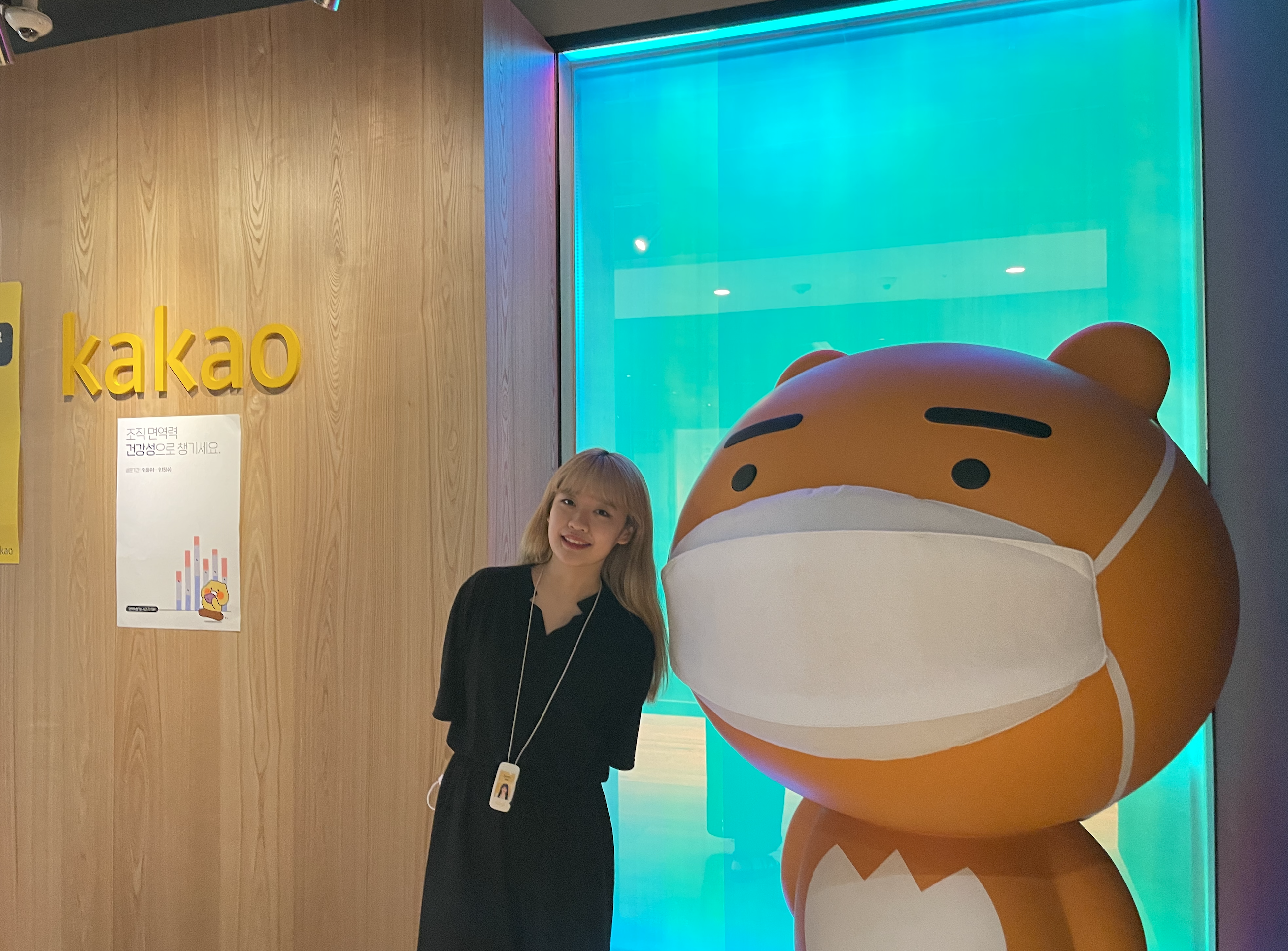
다들 회고록에 내년 목표를 적는데, 적당히 살자. 적당히 현생 챙기면서 살다보면 해피한 미래가 있겠지 👀 장기 계획세우면서 사는 타입이 아니라😳 2022년에도 활기차게 에너지 넘치는 쟈미로 살자 2021년 고생 많았다 안녕🙌🙌
Before I start this retrospective, “once again this year,” there were no issues with the KakaoTalk messaging server at year-end!!! Since I was the one directly handling the year-end response this time, I wanted to document the year-end experience too, which is why I ended up delaying this retrospective.
I joined the company in September 2020 and started doing real hands-on work from December, and now it's 2022!! I can't believe I'm in my 3rd year?!! It's so surprising lol. I've really only been doing actual work for about 1 year and 1 month, yet I'm a 3rd-year developer.. That's amazing all over again.
So 2021 was a time for me to adapt as a working developer after joining the company, and since development became my profession, it was also a time to try things outside of coding to find a balance between work and life. With that, let's dive into the retrospective!
This retrospective feels like writing a year's worth of diary entries, so the readability isn't great.
1. Work
1-1. Treating work like homework?
I wrote daily work logs and tackled company tasks one by one, and comparing the first and second halves of the year, I can definitely feel a big difference.
In the first half, just deploying the dev version of the regular chat was thrilling and nerve-wracking, but by the second half, I was scaling up servers and deploying that same regular chat to the real/production version, tweaking ansible configs here and there for deployment settings, and eventually even handling the year-end response. Is this what it means to gain experience..?😳
There was definitely a noticeable difference in how I approached work between the first and second halves. In the first half, I kept wondering, "Am I really good enough to take on such a big task? I don't know much — should I really be taking on messaging work?" I hesitated and only worked on things that senior developers assigned to me. But in the second half, compared to the first, I started proactively seeking out work. I picked up a few issues that had been sitting around in our team, got closer with the client-side developers and actively communicated with them to provide messaging logic guidelines, and when I found something in the code that I wanted to fix, I'd create an issue and work on it myself. Early in the first half, a senior on my team told me, "Jyami, you do your work like it's homework." When I first heard this, I thought nothing of it — like, "Well, I've always done my homework well and with high quality. Does that mean I'm very meticulous?" But it kept bugging me, so I asked Eun about it and realized it meant I needed to be more proactive with my work.
1-2. What makes a good developer?
Still, I feel like I'm only picking up small, minor issues for now. There was a senior developer who volunteered to lead the C-to-Java porting effort, and I wonder if someday I'll be the one raising big issues like that too. Seeing things like this, I really feel there are so many people to learn from in the messaging team. But because of that, my thoughts on "what kind of developer should I be" have shifted since before and after joining the company. Before, I naturally thought since I love Java and Spring, I should dig deep into them and apply clean code, DDD, and all that stuff, and that once I started working, if I dug into Spring's internals, I'd become a good developer. But after joining, I've been realizing that knowing how to design better server architectures and properly use various components is also extremely important.
I think it's because when outages happen or when planning for new components, what matters more than how you write the code is the practical perspective — how to improve performance, how to handle edge cases, and so on. So before, when it came to using Redis, I used to think about which methods to use with spring-data-redis to write good code and good test code. But now, working in the messaging team, I've realized you need to think about Redis itself first. I've learned from experience that understanding Redis's data structures, failover policies, eviction policies, backup strategies, and so on is more important. So my thinking is shifting toward the idea that rather than being good at a particular language, a developer who can solve problems well when issues arise is probably the best to work with. I shared these thoughts with my team lead several times, and they advised me that everyone walks a different path and there's no single right answer for what makes a good developer.
1-3. Intern mentor / New hire code reviewer
Starting in the second half, interns and new hires began joining under me. I still feel like a newbie myself.. but I mentored an intern and am now responsible for code reviews of new hires who came in through the regular recruitment process. Honestly, I was a bit worried at first since some of them were older than me, but it turned out fine.✌️ After all, the new hire assignments were within the scope of what I knew, and anything I didn't know, I could just study up on.
Although I don't have a ton of experience myself, while mentoring the intern, I figured out what kind of person the company wants to hire as a new developer and guided them accordingly.
Many new developers, when working on their assignments, really want to perform like experienced developers — they want to show they can handle everything on their own without asking. So they dig deep into every requirement spec the mentor gives them, and as a result, they quantitatively meet the requirements. But in doing so, what's easy to miss is the "why" — "Why did you decide to develop it this way? Why did you think this should be the output?" Let's say there's a requirement for server performance testing. The new hire looks into it, gets a recommendation from their mentor to use a tool like ngrinder, confirms the server TPS looks good, and submits a results report. But then the final interviewer asks things like: "Why did you choose these comparison groups for the performance test?", "If N users access the server, this TPS might not be enough — do you have other metrics? / How could you improve it?" and so on. They value the logical reasoning behind your decisions — why you wrote the code this way, why you chose this tool, why the server is structured this way.
But I think it's honestly not easy for a mentor to anticipate all these questions and prep the mentee for each one. So ideally, the mentee should research various references on their own, compare the pros and cons of this tool versus others, ask the mentor for advice on how things are done in the team they're currently working in, and even if they don't implement it in the intern assignment, come prepared knowing about expansion plans and current shortcomings. The company seems to want to see that kind of passion and growth potential. Writing this out, I realize it's really not easy…😳
Working closely alongside the intern, I learned a lot, and I did my best to help them pass — advising them on everything from code to decision-making. But looking back, I think my enthusiasm might have been even greater than the intern's.. haha. That's when I most vividly felt that collaboration and managing people isn't easy, and I think I was going through some growing pains as a developer during that period. I started thinking about how, as I'll eventually become a senior to many people, what's the best way to give advice that's actually helpful. So these days, while doing code reviews for the new hires, I first share books and articles that are good to read at the code level and drop them in the PR🙌 (I tend to give pretty tough reviews.. so hang in there, my reviewees..heh)
But then again, writing all this out, it is tough ~_~ I'm originally the type who lives without plans (a hardcore ESTP), so I figure if I just do my best in the present, I'll probably turn out to be a pretty decent person in the future too.
2. Activities outside of development
This year, I cut back on community activities. Since I was the GDSC EWHA lead, one of the questions I got during my Kakao interview was, "Do you enjoy participating in developer communities?" And I stayed true to my answer: "During my 3-2 semester as lead, I felt proud of contributing to many people and building new experience. But that semester, my growth as a developer stalled. Between inviting speakers and preparing events, I didn't have enough time to study development, and my skills were about the same as in my 3-1 semester, which was frustrating. So if I join the company, I plan to step back from developer communities early on to focus on studying and adapting to work." I followed through on that. I've always found it easier to commit to NOT doing something rather than committing to doing something😝
But looking back, I actually ended up doing this and that..? Maybe I just can't help being an attention-seeker.
2-1. YouTube
My goal was to post on YouTube once a month. I wanted to focus my blog on technical content, but that didn't go well. Oh well, what can you do — at least I managed this much while living my life!! Hmm, as of January 16, 2022, my YouTube channel has 2,813 subscribers. It's amazing that people enjoy it even though I only upload casual VLOG videos. Meanwhile, I personally only watch YouTube for killing time and relaxation — variety shows (The Genius, Crime Scene, Workman, Civilization Express), gaming channels (Paka, Ssal Tube, Queen Lux) — so I'm a YouTuber who doesn't watch vlogs..! (proudly)🙄
People at work ask me about YouTube revenue, and the answer is none. To earn YouTube revenue, you need over 1,000 subscribers and 4,000+ hours of watch time, but since I don't upload many videos, I don't have enough watch time for ad revenue. Oh, but in the first half of the year, I got sponsorship and ad offers from Likelion and Mars Sleep, so I filmed some sponsored content. But making videos with sponsorships felt like work, which took the fun out of uploading YouTube videos, so I've been declining all sponsorships since then. Unless it's a dev-related product, I'll probably keep turning down cosmetics and other miscellaneous product requests lol (though I do think electronics or pouches could actually be useful🤔)
When I look at YouTube Studio analytics, it shows strategy insights, and surprisingly, "Code With Me" videos get a lot of views. So I kind of want to film them with nice interior decor and pretty lighting like other Code With Me channels..! But ugh, interior decorating is really hard for me;;; My decorating attempts always lack that aesthetic vibe. I'll do more research😵💫 As for the viewer demographic, since it's mostly developers watching, the age range is 18–34 and the gender ratio is 2:1 (male:female). It seems like a lot of people find my channel through Pangyo Walker (ah, I genuinely love this YouTuber — their videos are so fun), Jocoding, and Nomad Coders.
2-2. Blog
As for the blog, I actually spent more months reading books this year, and while I did take notes, lately I've been thinking "instead of re-reading my notes, I'd rather just re-read the book," so I've only saved them on Git and haven't organized them into blog posts. As a result, the number of posts on my blog dropped significantly. So my most popular blog posts are mostly retrospectives and job-landing stories,, hmm — a developer blog where retrospectives are more popular than technical posts 🙄 is this right? While working with my team, there are several topics I want to write about like ansible and other things, but ah, writing blog posts and editing YouTube videos on weekends is really not easy when weekends are so precious for office workers…😘 Let's try to make some time in 2022.
Oh wait, now that I think about it, I didn't write on my own blog — I wrote on the company blog lol. It feels pretty great to have my article on the Kakao Tech Blog.. It was something I'd always wanted to do, and a related team actually reached out to me first, haha. The posts are below.
https://tech.kakao.com/2021/05/24/jyami/
뉴크루의 카카오 백엔드 개발자 이야기
안녕하세요, 톡플랫폼개발팀 톡메시징파트의 신입 개발자 쟈미(jyami)입니다. 저는 자바, 코틀린을 좋아하는 백엔드 개발자이고, 카카오에 들어온 지는 약 반 년이 되어갑니다. 제가 카카오에 입
tech.kakao.com
https://tech.kakao.com/2021/10/25/grace-hopper-celebration/
Grace Hopper Celebration 참가기
카카오에서는 크루의 주도적인 성장과 역량 향상을 위해 글로벌한 인사이트 확대를 경험할 수 있도록 해외 컨퍼런스 참관 참여를 지원하고 있습니다. 안녕하세요, 톡플랫폼개발1팀의 jyami입니
tech.kakao.com
The "New Crew's Kakao Backend Developer Story" post above got shared a ton on Facebook at the time. Career/new developer topics are definitely super popular. If I write on the company blog again next time, I really want it to be about applying a specific technology. I'd been feeling like I've only been producing career-related content, which made me wonder, "Have I actually grown technically?"🙌 (But lately I haven't been studying… hmm…)
2-3. External interviews
In the first half, I got more interview requests from various places than I expected. They were all pretty similar — career-related stories about landing a job. Requests came from my university, college magazines, tech newsletters, and more, all featuring my story.
http://inews.ewha.ac.kr/news/articleView.html?idxno=32531
선배들의 따끈따끈 ‘취뽀’ 성공담 – 카카오(Kakao) 개발자 편 - 이대학보
코로나19의 여파로 취업 시장이 얼어붙었다. 청년층의 실업자 수는 2017년 이후 최고치를 기록했다. 이런 취업난에도 최근 다양한 분야에 취뽀(취업뽀개기)한 이화인들이 있다. 본지는 이들의 이
inews.ewha.ac.kr
https://maily.so/1step/posts/4a440c
📑 IT 대기업 입사는 공채만이 답?
프로합격러가 들려주는 주니어 상시채용 취준 꿀팁
maily.so
http://www.campl.co.kr/contents/content_read.asp?idx=10483
“하고 싶은 건 다 해보고, 끊임없이 배우는 것이 중요해요” 카카오톡 김민정
캠퍼스플러스
campl.co.kr
3. Study Groups
When I was a newbie, I felt like I had to study everything under the sun, so I pushed myself pretty hard in both the first and second halves of the year and ended up doing way more study groups than I expected. But looking back now, I kind of regret spreading myself so thin instead of just focusing deeply on a few things I was truly interested in. I've done all sorts of study groups by now, but it started feeling like I was wasting that time, so I quit everything and I'm currently taking a break. I want to study when I actually feel like it, and if I start a study group again, I want to focus on just one when I actually have the bandwidth for it.
3-1. Next Step Effective Kotlin (Feb – Mar)
I had been reading Kotlin in Action on my own but only got through about chapter 5, and since I never really had a chance to use it in practice, I only knew the parts of Kotlin that were compatible with Java syntax — I didn't feel like I truly understood Kotlin's own idioms and was using them properly. So I thought maybe if I tried writing Kotlin the way I did at Java-Bom and the Woowa Precourse, I'd get more comfortable with it, and signed up for the Next Step course. It was great to learn about Kotlin syntax and patterns I didn't know through code reviews, but doing the missions after work was really tough... So I only completed about 2–3 out of 4 missions and couldn't finish them all. Still, every piece of review feedback was genuinely helpful and I was grateful. I need to study it again separately… now that I'm starting Kotlin-related work, I'll have to dig deeper.
https://edu.nextstep.camp/c/Z9QeJlCi/
이펙티브 코틀린(Effective Kotlin) with TDD, Refactoring, Clean Code
edu.nextstep.camp
3-2. Java-Bom
This is a study group I've been part of since my junior year of college. Honestly, this group is a big reason I was able to study Java more intensively, and I think it helped a lot when I was job hunting. Every single member ended up landing a job — Baemin2 / Naver / Kakao / Marit — and despite that, we still kept going this year, steadily reading books little by little, asking questions, answering them, and looking things up together. You can see the list of books we covered this year at the link below, and at some point the repo crossed 200 stars!! Everyone puts a lot of effort into organizing and maintaining the repository, so it felt really proud and amazing to know that so many people were referencing it.
https://github.com/Java-Bom/ReadingRecord
GitHub - Java-Bom/ReadingRecord: 📚 책 읽고 정리하기 📚
📚 책 읽고 정리하기 📚. Contribute to Java-Bom/ReadingRecord development by creating an account on GitHub.
github.com
At Java-Bom, we covered a total of 3 books, and here's how I felt about each one. (The names in parentheses are the issue labels we use to manage them.)
- Toby's Spring (Spring of Toby): This is definitely a must-read for any developer working with Spring. Some parts I skimmed through, others I read carefully, but if I ever revisit this book, I think I should read it alongside the actual Spring source code next time. The thing is, I read it at such a slow pace this time that I'd sometimes forget what I'd read earlier and just move on. Going forward, I want to read even thick books at a faster pace. (Easier said than done, though..)
- Kubernetes Introduction (Kubernetes introduction): Hmm, personally I didn't find it very fun. The part about Kubernetes architecture that I wanted to dig deeper into — which I studied on my own by cross-referencing Kubernetes in Action and the official docs — was interesting, but the rest was basically typing out YAML files and being introduced to various features. Since I've already used Kubernetes before, the parts introducing each object's functionality via YAML were stuff I already knew, which is probably why. So I enjoyed Kubernetes in Action more than this introductory book. But if you've never learned Kubernetes and want a hands-on-lab style experience to follow along with, this book isn't bad either.
- The Definitive Guide to Spring Batch (Definitive Guide to Spring Batch): I started this book hoping it would help me write better Spring Batch jobs, but the main takeaway ended up being just getting a better look at the batch repository structure. When I wasn't the one leading the session, I'd just kind of read through and move on. (Around this time I was starting to get tired of reading books.) The book introduces batch interfaces and briefly explains various implementations, but if you just note "oh, this exists" and don't actually use it yourself, it doesn't really stick — that's how I felt about it. I'm definitely the type who prefers getting a feel for things by actually coding rather than just reading. But if there's a specific implementation you want to use, I think you could get a quick overview from this book and then consult the official Spring Batch docs for a fast understanding.
The Java-Bom study group is currently on pause. Everyone's busy with work and motivation is low, so we decided to take a break.
3-3. System Design Study Group (Aug – Nov)
- System Design Interview – An Insider's Guide
This study group was organized by Jeongdong, whom I got to know through GDSC. I ended up studying with completely new developers I had no prior connection with, and we read the book as a group from Baemin / Toss / AWS / Kakao. The great thing about reading this book with people from different companies was hearing real-world stories about how system designs are actually used in each company's domain. The book covers design topics at a fairly high level, so the content could feel lightweight on its own, but it was surprisingly fun as each member filled in the gaps with their own experiences and knowledge. Through this study group, I started thinking that beyond the application code I mentioned above, I should also become a developer who pays more attention to system design.
Jeongdong shared some great article links and YouTube videos for studying design, and my goal is to go through all of them this year and upload them to my blog one by one. Reading this book alone left some gaps. Also, while reading this book, I asked a senior developer on our team how you can estimate things like TPS per server in interviews, and they said it's a matter of experience. So I got the insight that it's important to remember or document the number of servers our team uses, the corresponding TPS, and the architecture. In fact, during retrospectives for outages or big events like year-end traffic spikes, we go over various numerical metrics, and it's really great every time we do it.
3-4. Book Study Group (Jan – Nov)
This is a study group run by Wonbeom, whom I also met through GDSC, along with his college friends. I don't remember how I ended up joining, but unlike Java-Bom, this group reads and reviews books on an incredibly fast cycle. Once we pick a book, we meet twice a week, and each time we need to have read one chapter (about 60–70 pages). I was used to reading books at a leisurely pace, and I'm the type who struggles to read even one chapter a day (I genuinely hate reading books unless they're novels). But I just told myself "let's push through and at least read one chapter a day" and that changed me. The upside was that I ended up reading way more books than expected, but I also often had to rush past parts I wanted to focus on because of time pressure.
- Microservices Patterns: This was the very first book we read so I don't remember it too well 😢 But I do recall looking at various patterns and diagrams and trying my best to understand them by mapping them to examples I already knew. Since our team was already using some of these patterns and not others, this approach to understanding was possible. The hardest part was definitely the distributed transactions section.
- DDD Start: Since some study members didn't know DDD, I thought it would've been better to read this book before the MSA book above. What was great was learning that the things I'd been calling "object-oriented" were actually named with specific terms like Aggregate, Domain, Domain Model, etc. I did read this book, but if you asked me "are you doing DDD?" I'd probably say I don't think I'm truly understanding and applying it properly — because I'm not consciously aware of those terms when I implement things. The book itself is explained very simply, so it's great for someone who's literally just starting with DDD.
- Refactoring (I posted the 2nd edition cover but actually read the 1st edition in Java): Since I was assigned a refactoring task at work, I had high hopes that this book would be super helpful. Honestly, I was a little disappointed in some ways. Some of the patterns and strategies introduced here can be done with IntelliJ IDE features — I guess it can't be helped since it's an older book. But I do agree it deserves to be called a must-read for developers.
- Kubernetes in Action: I was already writing Kubernetes YAML, but it felt great to fill in the deeper, more specific knowledge gaps one by one. However, as I got into the later chapters covering objects I'd never actually used, it became hard to understand or think of applications. That said, I really dug into the Kubernetes architecture components like etcd, API server, kubelet, and others through this book.
- Designing Data-Intensive Applications: Oh man, this one was really hard. I was reading this alongside the System Design Interview book, and that's around when I really felt the need to study distributed system design more seriously. But seriously, it's really hard. Not everything in the book was useful to me, but roughly the first two-thirds was excellent. The latter part covered data analysis topics like Hadoop and Spark, which just didn't interest me.
I wrapped up this study group too. All my study groups this year were just book study groups, and I ended up only reading books during study time without ever actually implementing code or digging deeper, which gave me a bit of an existential crisis. So now I've quit everything! Time to refresh and get back to studying what I actually want.
3-5. Internal Company Study Groups
- Redis study group: This was an internal study group where most of our team members participated. Here, I also gave an internal presentation on how to use redis-cluster with k8s helm. At the time, I analyzed the bitnami repo and presented what commands were being executed internally to enable certain configurations. However, I'm not currently involved in the redis-cluster migration work our team is doing. I attended the progress presentations from the people working on the migration, and I was really impressed — it can't be easy to study so much to apply what you've learned in practice, keeping everything from config verification to monitoring in mind.
- Advanced Programming in the UNIX Environment: I'm doing this with a junior developer who joined 9 months before I did, just the two of us. Since our team has some code written in C, I started reading this book hoping it might lower the barrier to entry a bit. Umm... it's hard. There are explanations of UNIX functions and conventions that are sometimes hard to relate to, and sometimes I think I should have paid more attention in my operating systems and computer architecture classes. But since I started this study group with a coworker, we'll probably muddle through to the end somehow.
3-6. Books I Read on My Own
- Netty in Action: I had previously read this when I needed Netty for the project I did during my conversion from probationary to full-time employee. But since the intern's project also used Netty, I read it again to give proper code reviews and guidance. It's a quick read once you've been through it, but trying to actually apply and build something with it was not easy.
- Kotlin in Action: I started reading it but never finished 😢 I felt like I wouldn't truly internalize it unless I followed along and ran each example from the book, so I stopped just reading with my eyes. But then it got pushed to the back burner by other book study groups.
- Redis Operations & Management: Simple and easy to read, packed with nothing but golden tips. Even better that it's under 100 pages. My brief summary is on my blog: https://jyami.tistory.com/141
- The Programmer's Brain: Currently reading this. I got tired of only reading dev books, so I picked this up as kind of a developer humanities (?) read. As I'm reading it though, I'm starting to think "wait, is my brain basically a computer?" It describes human memory using analogies of RAM, disk, and CPU.
4. Ewha Womans University
4-1. TOEIC and Graduation
I graduated!!! Finally!! I almost couldn't graduate because of the TOEIC score requirement, but I passed that too!!! Ideally, I should have taken the TOEIC at the end of 2020 and graduated in February 2021 right on time, but at the end of 2020, I was preparing for my Kakao full-time conversion interview and didn't keep track of the graduation requirements. So I deferred and aimed for August 2021 graduation... but I forgot about that too, and was just living life until around June when it hit me. I calculated the TOEIC score submission deadline and had exactly 2 weeks to study.
The last time I took the TOEIC at the end of 2020 with zero preparation, I scored 565. But now I needed to hit 700 within 2 weeks..!! I wish I'd studied earlier, but I kept putting it off and ended up needing to raise my score by 135 points in just 2 weeks. So at the time, I was going to work at 9 AM, getting off at 6 or 7 PM, eating dinner, studying TOEIC until 10–11 PM, then playing a game or two of LoL to unwind. The result? 710 points. My goal wasn't to actually learn English — I was purely focused on graduating, so I only needed 700. Getting exactly past 700 in just 2 weeks felt amazing (if I'd studied any more, I would've felt robbed).
And just like that, I actually graduated!! By my school's standards, I graduated with a 3.85 GPA out of 4.3. My secret to the GPA? I loved my major, so my major courses were almost all A-range. I loaded up on major courses and cut down on liberal arts, and handled most liberal arts as pass/fail so my GPA would mostly reflect my major courses. So my major-only GPA is 4.05 out of 4.3. Since it's an indicator that I was pretty diligent during school, I made sure to put it on my resume. (Ah... I need to update my resume too...)
4-2. Student Union Building Renovation Fund Donation
Last February, the school was accepting donations for the student union building renovation fund, so as a fresh working adult who had just started receiving a steady paycheck, I went ahead and donated 3 million won right away. They said my name would be engraved on the donor memorial plaque, which I'm super excited about. Having my name displayed somewhere on campus was one of my bucket list items, and I thought "seize the opportunity while it's here!" I initially signed up via automatic monthly payments (CMS), but the next day I called the Office of External Affairs and just wired the whole amount in a lump sum. Being able to live confidently and on my own terms is definitely partly thanks to attending this school, and I have real affection for it, so I really wanted to do this.
5. Daily Life
5-1. Driver's License
I got my driver's license around May. I'd been putting it off using the excuse that I didn't have money, but once I became a working adult and my daily life and income stabilized, I thought "why not give it a shot?" and went for it. I passed the written test, skills test, and road test all on the first try!!! But since I live in an area with great public transportation and don't really need a car, I don't actually own one, so it's destined to be a dusty license lol. When the Casper first launched, I was seriously tempted to splurge on a car, but when I thought about where I'd actually use it, I couldn't think of anywhere, so I figured I'd buy one when I'm closer to 30.
Oh, a funny memory from getting my license... I'm terrible with directions, and I absolutely could not memorize the road test route, so I just wrote down the roads and every action I needed to take on paper and memorized it all. There was a YouTube video from the driving school showing the road test practice route, and I watched it while writing things like "When you see the Shinhan Bank sign, turn on right blinker" > "Then make a right turn at the intersection (turn the wheel one full rotation quickly)"... My friends were horrified when they heard. When I actually need to drive for real someday, I'll make sure to get proper driving lessons first..
5-2. Hair Color Update
I had never bleached my hair in my entire life. Back when everyone experiments with hair color — right after the college entrance exam in senior year — I was like "Koreans look best with black hair" and only ever got perms lol. Then out of the blue in May this year, I thought "I'm in my early 20s — if I don't bleach my hair now, I'll probably never do it for the rest of my life," and I just went for it. I've been keeping it up since then. After bleaching, I bought a ton of hair products and learned a lot from my hairstylist about things like heat reactions and whatnot. Changing my hair color was definitely a great mood booster. My hair tends to have strong heat reactions, so even after bleaching 3 times, platinum blonde is hard to achieve 😢 Colors like ash gray don't come out right, so I mainly go with reddish tones. But I feel like my hair color is getting lighter with each bleach...? I'm debating whether to keep it up for about another year.
5-3. Working Out
While working from home, at some point my back started hurting from sitting too long, and I thought maybe it's time to start exercising. Since I was mostly working from home, I first started by switching to a Sidiz chair, but aside from that, being on my own with my own cooking made me suddenly worried about my diet and health. Starting from last summer, Eunnim kept telling me "exercise before your body gives out," and I started thinking I'd probably end up exercising only after my body breaks down, so I decided to start personal training as soon as possible. The frustrating part about PT was that my trainer kept changing 😢 Including my current PT sessions, I've done about 40 sessions total, but I've had 3 trainer changes. My first trainer was a great fit — I got into working out, started going to the gym on my own, and bought 20 more sessions. But that trainer quit, so I did 7 sessions with a different trainer while adjusting, then switched to a new gym where I'm now doing 20 sessions with yet another trainer.
When I was with my first trainer, I wrote down all the advice they gave me after every session so I wouldn't forget. Now I use the Strong app.
I can definitely feel that my strength has improved since the beginning and I'm getting more interested, but I really wish I could have continued with my first trainer. I went from doing bodyweight squats to now squatting with a 40KG barbell on the rack — if my first trainer could see that, they'd say "wow, you started like this and now look at you!" and be proud together with me 😢. Still, thanks to that first trainer, I got that great feeling of crushing goals one by one, and talking with people around me who are into fitness — like Jaeyeon and Eunnim — and learning more from them made working out surprisingly fun. I used to go around whining like a slug or a snail saying "ugh, exercise is so annoying," and it's wild that my mindset changed in just half a year.
I go to the gym about 3–4 times a week. With PT sessions, I'm also trying to focus more on stretching and do lots of foam roller massages. Being a developer, the muscles around my neck, shoulders, and armpits definitely get really tense, so I try to use a massage ball or foam roller between work to keep the muscles from knotting up. It's nice because it also refreshes me during work, and when I do upper body exercises without knotted-up muscles, it hurts less. Anyway, starting PT led me to get interested in various types of exercise, and I genuinely want to build more strength and try other workouts too. Compared to last year, exercise has been the biggest change in my life.
And that's the end of my retrospective!! The GDSC lead members and I do a yearly retrospective relay, and even though I always grumble about how bothersome it is, once I actually start writing, I end up going on and on about my thoughts from the past year. I guess that's natural since it's basically a year's worth of diary entries.
Everyone writes their goals for next year in their retrospectives, but I'll just say: let's take it easy. If I just keep taking care of my daily life, there'll be a happy future ahead, right? I'm not the type to make long-term plans 😳 Let's live as an energetic, vibrant Jyami in 2022 too! 2021, it's been tough — goodbye 🙌🙌
'Daily > About Jyami' 카테고리의 다른 글
| 2022년 회고 | 2022 Year in Review (3) | 2023.01.26 |
|---|---|
| 공채없이 카카오 개발자 취준기 | How I Got a Developer Job at Kakao Without Open Recruitment (110) | 2021.01.25 |
| 2020년 회고록 | 2020 Retrospective (31) | 2020.12.31 |
| 2019-2020 DSC Ewha Lead를 마치고 | Finishing My Journey as 2019-2020 DSC Ewha Lead (3) | 2020.12.20 |
| 네이버 백엔드 인턴십 후기 | Naver Backend Internship Review (69) | 2020.07.29 |


댓글
Comments